Selecting a reliable supplier is one of the most important decisions for organizations investing in commercial cleaning equipment. Whether you manage industrial parks, transportation hubs, campuses, logistics facilities, or large commercial properties, the supplier relationship often has a greater long-term impact than the equipment purchase itself.
As demand for autonomous and electric cleaning equipment continues to grow, many facility managers are evaluating international floor cleaning machine supplier options to improve operational efficiency and address labor challenges. However, negotiating favorable terms requires more than comparing product prices. Buyers must consider technical support, spare parts availability, training, warranty coverage, and future scalability.
Understanding what to negotiate before signing an agreement can help organizations maximize the value of their investment in modern floor cleaning machines.
Understanding The Total Value Beyond Purchase Price
Price is often the starting point of any supplier discussion, but it should not be the only factor considered. A lower acquisition cost may not result in lower ownership costs if maintenance support, training, or spare parts services are limited.
For organizations operating large facilities, equipment reliability directly affects cleaning performance and labor efficiency. This is particularly important when adopting autonomous cleaning technologies that become part of daily operations.
When evaluating a global floor cleaning machine supplier, procurement teams should examine:
Product reliability and operational history
Availability of replacement parts
Technical support response times
Training programs for operators
Warranty terms and service coverage
Software updates and system maintenance
These factors often have a greater influence on long-term operating costs than the initial purchase price alone.
Why Technical Support Should Be A Key Negotiation Point
Modern autonomous cleaning equipment incorporates advanced technologies such as LiDAR navigation, cameras, sensors, cloud connectivity, and route-planning software. As a result, after-sales support has become a critical component of any purchasing decision.
Before finalizing an agreement with a floor cleaning machine supplier, buyers should clearly define support expectations. Questions to address include:
Is remote troubleshooting available?
What is the average response time for service requests?
Are software updates included?
Is technical training provided during deployment?
What support is available after the warranty period?
According to the official Greendorph website, the company provides technical and sales training on its equipment and offers support for distributors and customers globally. The company also states that specialized technicians are available to assist customers when needed.
For organizations operating across multiple locations, access to reliable technical support can reduce downtime and improve equipment utilization.
Evaluating Product Specifications During Negotiations
Purchasing teams should also verify that equipment specifications align with operational requirements before discussing commercial terms.
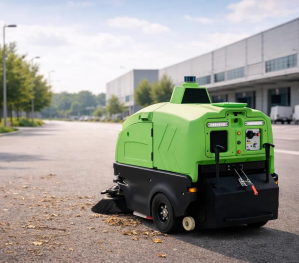
For example, Greendorph offers both fully autonomous and semi-autonomous cleaning solutions for commercial and industrial environments. Its product lineup includes the autonomous YJ130 outdoor sweeper as well as several YJ80 models designed for sweeping, vacuuming, and pavement cleaning applications.
The Greendorph YJ130 is designed for industrial parks, campuses, warehouses, public walkways, and transportation facilities. It combines autonomous navigation, intelligent route planning, automated maintenance functions, and long-duration operation to support large-scale outdoor cleaning tasks efficiently. By reducing manual intervention and maintaining consistent cleaning performance, it helps organizations improve operational efficiency while lowering labor requirements.
When negotiating with a floor cleaning machine supplier, buyers should request documented specifications, performance reports, and real-world application data to ensure the equipment matches operational needs rather than relying solely on marketing material.
Negotiating Warranty And Service Agreements
Warranty coverage can significantly affect the long-term value of an equipment investment. A comprehensive warranty reduces financial risk while providing confidence that the supplier will support the product after deployment.
Organizations should negotiate clear terms regarding:
Warranty duration
Coverage limitations
Parts replacement policies
Labor costs for repairs
Remote service availability
Software maintenance responsibilities
According to information published by Greendorph, the company provides a one-year warranty along with ongoing technical assistance.
For large-scale deployments involving multiple units, buyers may also negotiate extended service agreements or preventive maintenance packages that help reduce unexpected downtime.
Planning For Future Growth
Many organizations initially purchase a small number of autonomous units before expanding deployment across multiple sites. Therefore, scalability should be discussed during supplier negotiations.
A strong floor cleaning machine supplier should be able to support future growth through:
Additional equipment availability
Consistent product platforms
Fleet management capabilities
Operator training programs
International support networks
A strong floor cleaning machine supplier should not only meet current operational requirements but also support future growth through scalable solutions, standardized equipment platforms, comprehensive training, and ongoing service support. For organizations operating across multiple sites or regions, this long-term partnership approach can help streamline expansion plans, improve operational consistency, and maximize the return on investment in cleaning equipment.
Building A Strategic Supplier Relationship
The most successful purchasing decisions are based on partnerships rather than one-time transactions. Organizations should evaluate how well a supplier understands their operational challenges and whether the supplier can provide ongoing support as requirements evolve.
Companies such as Greendorph focus on autonomous cleaning solutions designed for industrial parks, campuses, warehouses, residential developments, and transportation hubs. Their portfolio demonstrates how cleaning automation is increasingly being used to address labor shortages while improving consistency and operational efficiency.
By approaching negotiations strategically, buyers can secure favorable commercial terms while also establishing a long-term relationship that supports operational success.
Conclusion
Negotiating with a global floor cleaning machine supplier involves much more than discussing equipment pricing. Organizations should evaluate technical support, warranty coverage, training programs, product specifications, and future scalability before making a final decision.
As autonomous floor cleaning machines become increasingly common across industrial and commercial environments, selecting the right supplier can significantly influence operational performance and long-term costs.
Solutions offered by Greendorph demonstrate how modern cleaning technologies are helping organizations improve efficiency while maintaining consistent cleaning standards. By focusing on both equipment capabilities and supplier support, businesses can make more informed purchasing decisions and achieve stronger long-term value from their cleaning investments.
