What evidence shows that a manufacturer can support an energy storage project throughout its lifecycle should be a key question when comparing battery energy storage system manufacturers.
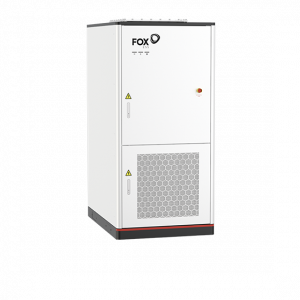
Supplier reliability affects commercial and industrial purchasers‘ ability to access products, implement systems, and receive long-term support. An accurate assessment should consider the business behind the system as well as the technology itself.
Reliability Starts With What the Manufacturer Can Prove
Marketing claims can make many suppliers appear similar. A more useful approach is to ask for evidence in several areas: technical development, manufacturing capability, product breadth, market acceptance, and after-sales infrastructure.
The publicly accessible information regarding Fox ESS‘s innovation initiatives, corporate structure, products, and market position makes it a good case study. According to its profile, the organization has local teams and service networks in various markets and operates across more than 90 countries.
That sort of information provides a starting point for due diligence for purchasers assessing commercial energy storage systems. Find a manufacturer whose capabilities can be analysed from numerous different aspects, rather than one with the biggest number of claims.
R&D Capability Reveals Whether the Technology Can Keep Evolving
Energy storage is not a product category where development stops after a battery reaches the market. Inverter technology, battery architecture, energy management, safety systems, and system integration continue to influence product development.
Fox ESS‘s innovation resources describe dedicated R&D capabilities and multiple technology development areas. The company also identifies R&D centers and an engineering organization supporting its energy products.
The value to a customer lies in what these capabilities can support. A manufacturer with substantial technical resources can better support new product development, platform refinement, and changes in project requirements.
R&D should therefore be assessed alongside actual products. A supplier‘s engineering claims become more meaningful when they can be connected to a diversified and continuously developed portfolio.
Manufacturing Strength Determines Whether Products Can Scale Beyond Pilot Projects
Commercial storage projects introduce requirements that small demonstration systems may not expose. Larger orders can place greater demands on production capacity, quality control, component availability, and delivery planning.
That makes manufacturing capability a critical part of supplier evaluation. Buyers should investigate where products are manufactured, how production is controlled, whether capacity can accommodate project growth, and whether the manufacturer has sufficient operational depth to support repeat orders.
The same principle applies to battery systems. Product consistency matters because a storage project may involve multiple battery units operating as one system. Manufacturing discipline therefore contributes to the predictability of deployment, commissioning, and subsequent service.
A manufacturer‘s company infrastructure should be considered alongside its product specifications. A technically attractive battery is less useful to a developer if the supplier cannot reliably support the required project volume.
A Broader Storage Portfolio Shows How Far the Manufacturer Can Support Different Projects
Product range can reveal whether a manufacturer has developed capabilities for different storage scenarios. A supplier focused on one narrow battery configuration may be suitable for a particular project, but broader requirements can demand different capacities, voltage architectures, or system configurations.
Both high-voltage and low-voltage residential battery families are available from Fox ESS. Installation professionals have alternatives to adjust storage capacity to meet various system needs thanks to the product‘s modular and expandable configurations, which are highlighted in the product literature.
The portfolio extends into commercial and industrial storage as well. C&I systems are designed around larger energy and power requirements and can incorporate functions such as peak shaving, load management, and PV-storage coordination.
This depth shows that the maker is thinking about several storage scenarios, which is important for purchasers. As project demands become more intricate, it might also lessen the necessity to procure separate technologies from unconnected vendors.
Market Evidence Helps Separate Established Suppliers From Unproven Claims
A manufacturer‘s own product information should not be the only source used during evaluation. Independent market research can provide another perspective on whether a supplier has achieved meaningful commercial adoption.
S&P Global Energy ranked Fox ESS No. 1 globally in residential energy storage by MWh shipments for 2025, while also ranking it first in Germany and the UK. The company reported these results in April 2026.
Such recognition does not automatically prove that every product is suitable for every project. Market shipment data should instead be treated as one piece of evidence showing that a manufacturer‘s technology has achieved substantial deployment.
For battery energy storage system manufacturers, this distinction is important. A supplier can make strong technical claims before building a meaningful installed base. Established shipment volumes provide additional context when buyers assess commercial maturity and market acceptance.
Long-Term Support Is Part of the Manufacturer‘s Product
Energy storage equipment remains part of an operating energy asset long after commissioning. Technical documentation, monitoring tools, warranty processes, software updates, troubleshooting resources, and local support can therefore influence the overall supplier experience.
Fox ESS‘s global company structure includes regional teams and service networks, while its product resources provide technical documentation for its storage equipment.
Digital connectivity can also contribute to ongoing system management. For projects using compatible equipment, cloud-based monitoring provides visibility into system operation and can support remote oversight.
Buyers should consequently ask potential suppliers not only how the system will be delivered, but also who will support it afterward. A reliable manufacturer should have a clear answer for both.
Putting the Evidence Together Before Choosing a Supplier
No single criterion can establish manufacturer reliability. Strong R&D does not compensate for weak production capacity, just as a large installed base does not automatically make a product suitable for a specific commercial project.
A more robust assessment combines several forms of evidence. Technical development indicates whether the manufacturer can continue innovating. Manufacturing capability points to its ability to deliver at scale. A diversified storage portfolio demonstrates broader engineering experience, while market recognition provides external evidence of adoption. Global operations and service infrastructure then address what happens after installation.
Fox ESS illustrates why this multi-dimensional approach is useful. Its public information brings together R&D capabilities, a broad storage portfolio, global operations, and significant residential market recognition.
While comparing commercial energy storage systems, these criteria offer a more realistic basis for supplier assessment than just looking at price, capacity, or efficiency claims.
Manufacturers who can demonstrate competence prior to a project, maintain consistent delivery during deployment, and continue to provide system support after deployment are the most dependable options. That is a useful benchmark for buyers evaluating different energy storage manufacturers.
