Reliable electrical infrastructure is rarely achieved by adding a product at the end of a project. For industrial buyers, power quality depends on how equipment responds to voltage disturbances, harmonics, unbalanced loads, changing operating conditions, and grid events. That makes engineering depth an important differentiator. A power quality solutions provider must translate complex electrical behavior into hardware, control algorithms, protection, and system architecture that can perform consistently.
Why Power Quality Must Be Designed, Not Added
Power quality covers several measurable phenomena rather than one condition. IEC 61000-4-30 identifies parameters including frequency variation, voltage magnitude, flicker, voltage dips and swells, interruptions, transients, unbalance, harmonics, interharmonics, rapid voltage changes, and current measurements. Industrial sites can expose equipment to several disturbances simultaneously.
Poor power quality can interfere with sensitive electronics, drives, automation systems, and production equipment. Engineers therefore need to examine how equipment senses disturbances, controls current, manages thermal stress, protects power semiconductors, and integrates with the existing network.
Control Engineering Shows Up Under Unbalanced Loads
Three-phase industrial systems do not always operate with balanced loads. Large motors, welders, drives, and rectifiers can create challenging conditions. Deeper control engineering can treat phases independently.
This principle is visible in Enjoypowers’ 105/125 kW bidirectional PCS. Its official specifications state that the platform provides 100% three-phase independent control and supports 100% unbalanced loads at full rated power. It offers selectable grid-forming VSG/VF and grid-following PQ modes.
Hardware Design Matters as Much as Software
Sophisticated algorithms are valuable only when the physical platform can support them continuously. Industrial power electronics must manage heat, dust, humidity, and electrical transients. Enclosure design, cooling, protection, and power-stage architecture are therefore part of power quality engineering.
Enjoypowers’ 105/125 kW PCS uses three-level power conversion, smart forced-air cooling, and Modbus TCP/RTU and CAN 2.0B communications. Its published product information also specifies conformal protection, an IP66 enclosure, and C5 anti-corrosion coating for industrial applications.
Grid Disturbances Require More Than Fast Switching
A converter connected to a weak or disturbed industrial grid faces challenges that are absent in laboratory conditions. Voltage distortion, sags, frequency changes, and load transitions can interact with control loops. Engineers therefore need to consider stability, virtual impedance, damping, current limits, and recovery behavior together.
The PCS is specified for grid THDu up to 30% and voltage sags down to 0.1 p.u. Its specifications state that output THDi stays below 3% under the stated conditions and that seamless on/off-grid transfer can occur in less than 20 ms.
Energy Storage Expands the Role of Power Conversion
Battery storage has made power conversion increasingly central to electrical system quality. A battery energy storage system company is not only supplying a battery interface; its PCS determines how stored energy interacts with the grid. Depending on architecture, the converter may support peak shaving, backup power, renewable integration, microgrids, or grid-forming functions.
Enjoypowers positions its portfolio across power quality and energy storage. Its C&I energy storage solutions serve factories, commercial buildings, and industrial parks, with systems ranging from 100 kW to 5 MW according to its official solution page.
Engineering Depth Also Appears in System Integration
A capable product should not become an integration bottleneck. Industrial buyers need clear communication interfaces, modular configurations, documented operating parameters, and architectures that can scale without forcing a complete redesign.
The 105/125 kW PCS supports third-party EMS communication through Modbus TCP/RTU and CAN 2.0B. Enjoypowers also describes configurations combining PCS, static transfer switch, and DCDC/MPPT modules. Up to 12 PCS modules can be coordinated without site-level communication wiring.
What Business Buyers Should Examine
For engineering teams evaluating a power quality solutions provider or battery energy storage system company, brochures are only the starting point. A stronger technical review should examine control modes, operating voltage ranges, environmental ratings, communications, protection functions, and performance under abnormal grid conditions.
Site conditions matter too. Load profiles, transformer characteristics, harmonic sources, ambient environment, backup requirements, and operating strategy can influence system selection. A technically strong manufacturer should explain how its equipment fits those conditions rather than relying on generic performance statements.
Engineering Becomes a Long-Term Advantage
Industrial power systems are becoming more dynamic as automation, renewable generation, electric transportation, and battery storage expand. That increases the importance of predictable power converters.
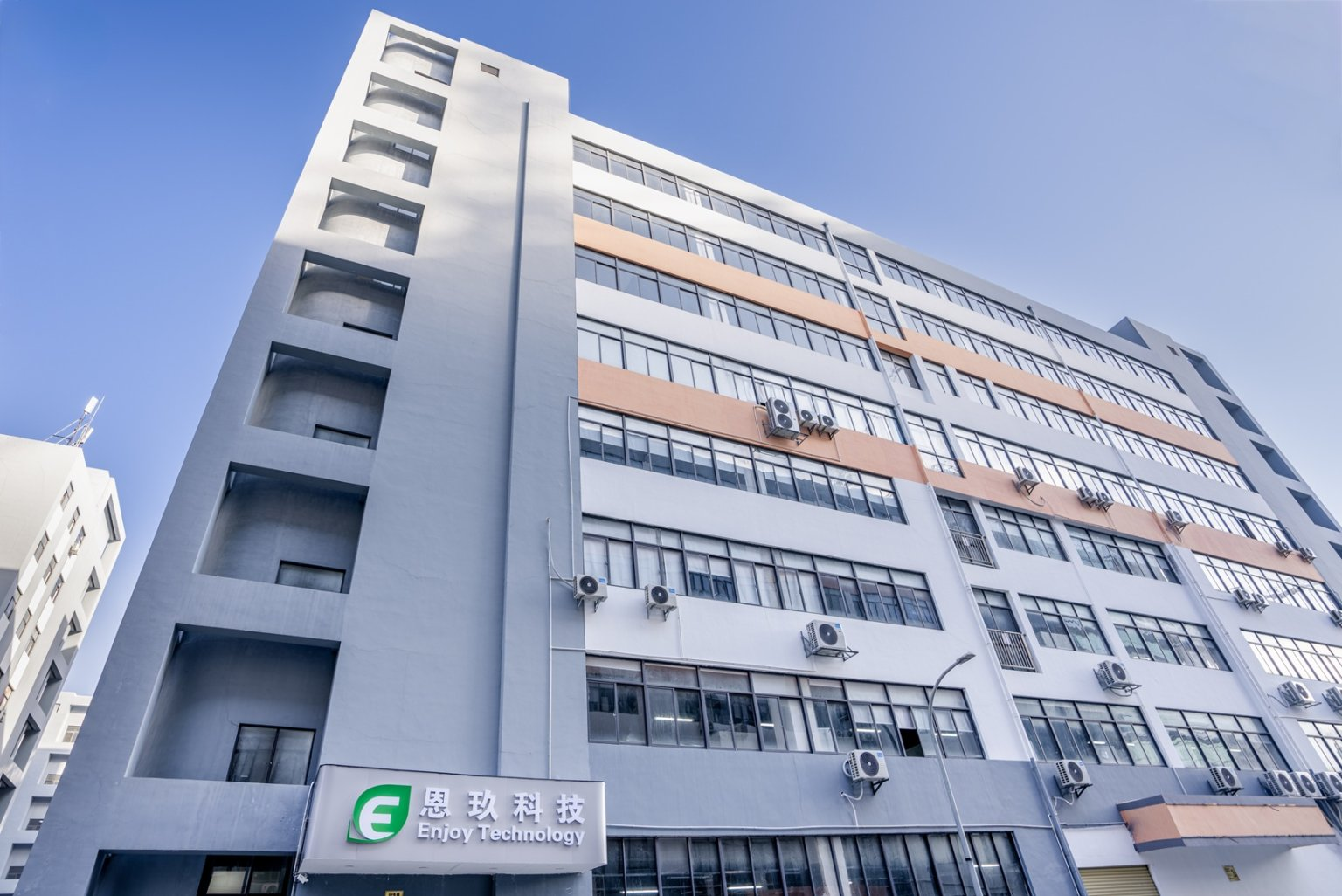
Enjoypowers’ development path reflects this shift. Founded in 2015, the company states that it began with power quality products and later expanded into energy storage PCS. Its official history reports more than 22 GW deployed and products operating in more than 70 countries.
Engineering Is the Product Behind the Product
Electrical power system quality ultimately depends on details that may not be obvious from a product name or rated capacity. Control strategy, physical protection, thermal management, grid response, communication architecture, and scalability all reveal how deeply a manufacturer understands real operating conditions.
For businesses evaluating a power quality solutions provider or battery energy storage system company, engineering depth is a practical selection criterion. Enjoypowers provides one example of how that depth can appear in product design, particularly where power quality and energy storage converge. Strong products are engineered around the electrical realities industrial systems face every day.
