Overlanding and remote car camping sit in a different category from a weekend campground stay. Trips often span several days without cell coverage, resupply points, or maintained roads, so gear choices have to favor self-sufficiency over convenience. The right backpack camping gear (the shelters, tools, and storage systems carried along for the journey) has to handle dust, temperature swings, and rough terrain while staying manageable to load, unload, and pack away each day. The practices below cover how experienced overlanders usually approach gear selection and organization when help is not close by.
Packing Priorities for Remote, Off-Grid Trips
A common mistake on early overlanding trips is packing for comfort first and function second. Redundancy matters more on remote routes than on a marked trail. A second way to start a fire, a backup water filtration method, and basic vehicle recovery tools such as a shovel, traction boards, and a tow strap usually come before anything purely comfort-related.
Water storage is best planned around the longest realistic gap between refill points, not the average one, because breakdowns and detours are common on unpaved routes. Food follows the same logic. Extra meals that need little preparation provide a cushion when a route takes longer than expected. Navigation and communication deserve a backup as well. Offline maps, a paper map, or a satellite communicator cover the stretches where phone signal disappears.
Power management also gets more involved than on a weekend trip. Many overlanders carry portable power stations or dual-battery setups to run refrigeration, lighting, and charging without draining the vehicle’s starter battery. Shelter deserves equal attention, since it affects vehicle load, setup time, and how exposed the group is to weather every night.
Shelter Selection: Balancing Space and Portability
Roof-mounted and tailgate-style tents have become a common middle ground between a full ground tent and sleeping inside the vehicle. They shorten setup and keep the sleeping area off wet or uneven ground, which helps after a long day on the road.
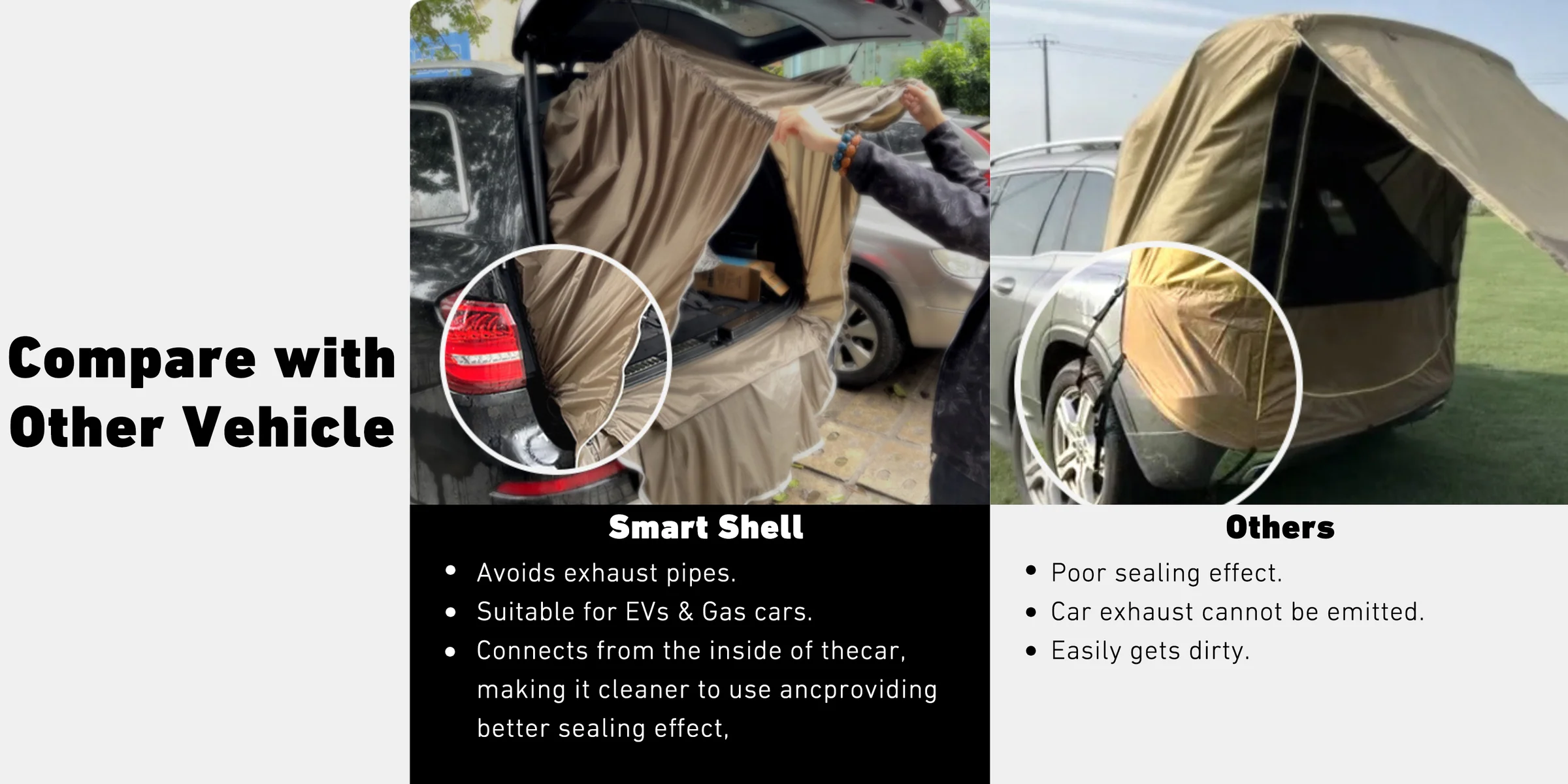
THECATAL’s Smart Shell is a tailgate tent that works with both gasoline and electric vehicles. Its connection avoids the tailpipe, and it can be pitched three ways: as a rear tent, as a side tent, or as a standalone shelter. The shell is silicone-coated ripstop 70D nylon, and the full tent weighs 26 lb (12 kg). Inside, the floor measures 3.5 m × 2.5 m (11.5 ft × 8.2 ft), which leaves room to sleep and store gear. Because the tent attaches to the vehicle, checking compatibility with the rear layout before departure saves frustration at camp.
Weather and temperature are covered too. The tent is designed for year-round use, with waterproof, windproof, snow-proof, and heat-resistant construction. Setup takes about three minutes with no complex assembly, which matters when daylight is short or weather is moving in.
Organizing Gear for Multi-Person or Basecamp-Style Trips
Longer trips, especially those with several travelers or an extended basecamp stay, usually need more separated space than a single tailgate tent provides. Multi-room designs split sleeping, gear storage, and shared living areas into distinct sections. That reduces clutter and keeps wet or muddy equipment away from beds.
THECATAL’s Magic Fort is built around that idea. The duplex layout offers 484 ft² (40 m²) of interior space and 3.5 m (137.8 in) of height, and the interior can be divided into different rooms as needed. It is sized as a family tent for 12 or more people.
For cold weather, two-way zippers on both sides are compatible with heating devices, and the tent vents gases while a heater runs. Even so, any heater used inside an enclosed shelter calls for ventilation and a working carbon monoxide alarm. For groups setting up a semi-permanent basecamp, this type of layout leaves room for separate cooking, storage, and rest areas without pitching several standalone tents.
Maintenance and Storage Practices for Long-Term Reliability
Gear used repeatedly over a season needs a maintenance routine, not just a packing list. Car camping tents should be dried completely before storage, cleaned of dirt with mild soap, and packed loosely instead of tightly compressed for long periods. These habits reduce the risk of mildew and fabric fatigue between trips.
The routine matters more for overlanding gear than for occasional weekend use. Equipment left damp or folded under tension after repeated trips is more likely to develop leaks or seam problems exactly when it is needed most, in a location without a replacement nearby. A quick check of zippers, seams, and poles before each departure takes only a few minutes and can prevent a failure far from help.
Matching Gear to the Type of Trip
Not every overlanding trip calls for the same equipment. A short solo route with reliable road access has different shelter and storage needs than a multi-week expedition supporting several people through varied terrain and weather. Group size, trip length, and season are the three questions that usually settle the choice.
Glamping-style tents usually emphasize standing room, spacious interiors, and multi-room layouts, which suit longer stays where comfort and shared space matter. Car camping tents, by contrast, are designed to fit different vehicle types, including SUVs, compact cars, and vans.
Travelers who want to compare shelters before a trip can browse camping gear online and review fabric, attachment method, weight, and interior size side by side. Checking those details against the demands of a planned route is more useful than choosing by category alone, particularly for trips heading into areas without easy backup options. The two-year warranty on THECATAL tents also adds some reassurance for shelters that will see repeated use.
