Racing cars place unusual demands on their electrical systems. Engines require strong starting current, while limited installation space and weight restrictions affect battery selection. Heat, vibration, and repeated engine starts create further challenges. For racing teams, choosing the right battery involves more than checking its voltage or physical size.
The performance of racing car batteries depends on several characteristics working together. Cranking power, weight, reserve capacity, charging compatibility, and mechanical durability all deserve attention. Understanding these factors helps motorsport engineers and vehicle builders select batteries that match actual racing conditions rather than relying on general automotive specifications.
Why Does Starting Current Matter?
Engine starting requires a short burst of electrical current to turn the starter motor. Racing engines may have demanding starting requirements due to their compression ratios, operating temperatures, or mechanical configurations. Insufficient current can cause slow cranking, particularly when the battery has already supplied power to other electrical equipment.
Peak Hot Cranking Amps (PHCA) and Cold Cranking Amps (CCA) provide useful reference values. PHCA describes starting performance under specified warm-temperature test conditions, while CCA measures cold-starting capability. Since these ratings reflect different conditions, buyers should avoid treating them as interchangeable. Comparing batteries requires consistent test methods and consideration of actual engine requirements.
Starting performance also depends on voltage stability during discharge. When current demand increases, battery voltage may fall. Excessive voltage drop can affect starter operation and sensitive vehicle electronics. Motorsport engineers should examine discharge performance alongside current ratings, especially when choosing batteries for engines that undergo repeated starts between racing sessions.
Weight and Packaging Affect Vehicle Design
Battery weight influences vehicle mass and installation flexibility. Reducing unnecessary weight can support racing vehicle design objectives, particularly where engineers must manage weight distribution. However, lighter construction should not compromise the current output needed for reliable engine starting or the energy required for onboard electrical loads.
Compared with conventional lead-acid designs, certain sodium-ion batteries offer lower weight at comparable starting requirements. This makes racing car batteries based on sodium-ion chemistry worth evaluating. Buyers should compare actual product weights and current ratings rather than assuming that every battery using the same chemistry offers equivalent performance.
Physical compatibility remains equally important. Battery cases, terminal positions, mounting brackets, and cable connections must fit the vehicle. Racing conditions also make secure mounting necessary. Procurement teams should obtain dimensional drawings and installation requirements before approving replacements, particularly when modifying a vehicle originally designed around a conventional automotive battery.
Heat, Vibration, and Charging Conditions
Racing environments expose batteries to changing temperatures and mechanical vibration. Heat from engines and surrounding equipment may affect battery performance, while repeated vibration can place stress on internal connections and mounting components. Battery selection should therefore include the manufacturer’s operating temperature limits and available vibration testing information.
Charging performance also matters between racing sessions. Batteries may need to recover energy after repeated starting events or periods of electrical consumption. Charging acceptance depends on battery chemistry, state of charge, temperature, and the charging system. Faster charging capability has practical value only when the vehicle’s electrical system supports the required charging conditions.
These requirements have encouraged further development in sodium ion battery manufacturing, particularly for applications demanding high discharge rates and thermal stability. However, chemistry alone does not establish durability. Buyers should review model-specific test results, protection requirements, and charging instructions before selecting a battery for motorsport use.
Reserve Capacity and Model Specifications
Starting current is only part of battery selection. Reserve capacity indicates how long a battery can support a specified electrical load under defined test conditions. Racing vehicles may operate cooling fans, control modules, data acquisition equipment, and other electronics. Teams should calculate these loads and determine how much stored energy remains necessary when the engine is not running.
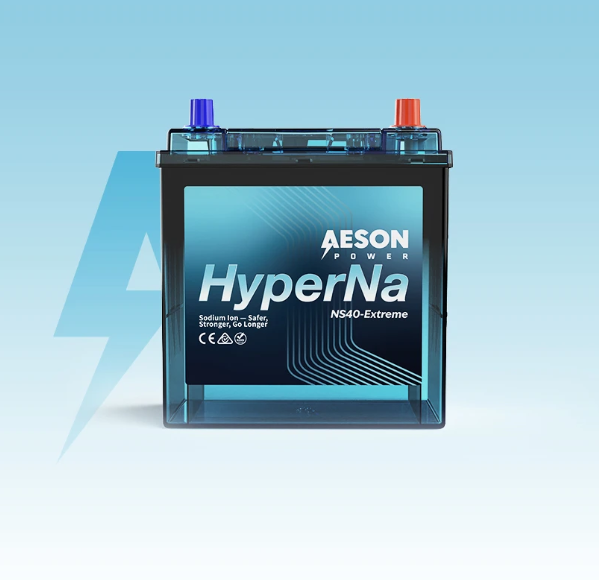
The NS40-Extreme from Aeson Power provides a practical example of a sodium-ion racing starting battery. Its specifications include 1,250A PHCA, 520A CCA, 312Wh of energy, and a 55-minute reserve capacity. The battery weighs 5.0 kg. These figures allow buyers to evaluate starting output, available energy, and weight together.
Such specifications also show why sodium ion battery manufacturing must address several performance requirements simultaneously. High current output does not automatically indicate sufficient reserve capacity. Racing teams should compare electrical demand, starting frequency, and vehicle charging conditions before determining whether a particular model suits their application.
What Should Motorsport Buyers Verify?
Purchasing teams should begin with engine starting requirements, electrical system voltage, mounting dimensions, and terminal configuration. They should also review charging voltage compatibility and operating temperatures. These checks help determine whether proposed racing car batteries can function within the vehicle’s existing electrical system without unnecessary modifications.
Product validation deserves equal attention. Buyers should request relevant discharge curves, vibration test information, temperature performance data, and charging instructions. When evaluating sodium ion battery manufacturing, they should also examine production consistency, quality inspection procedures, and batch traceability. These factors matter for racing teams purchasing replacement batteries or coordinating vehicle production.
Field testing provides another useful reference. Teams can record cranking voltage, starting behavior, battery temperature, and charging recovery across several racing sessions. Comparing these results with the manufacturer’s specifications helps identify differences between laboratory ratings and actual operating conditions. Maintenance personnel should also inspect battery mounting and electrical connections regularly.
Choosing Power That Fits the Track
Suitable racing batteries combine strong cranking performance, manageable weight, sufficient reserve capacity, and resistance to demanding operating conditions. No single specification determines suitability. Buyers should evaluate complete electrical requirements and verify the proposed battery under representative conditions before approving its use.
As an Australian sodium-ion battery supplier, Aeson Power offers racing starting solutions, including the NS40-Extreme, supported by its experience in sodium ion battery manufacturing. They provide battery options for demanding automotive applications. Motorsport teams and OEM buyers can contact them with their engine specifications, electrical requirements, and installation details to discuss suitable battery configurations.
