Metal surfaces are common in warehouses, factories, vehicle fleets, and industrial facilities. However, metal can reflect radio waves and affect the performance of radio frequency identification systems. When a conventional tag is attached directly to a metal object, reading distance may decrease or detection may become inconsistent. Buyers need to assess the mounting surface, required reading distance, installation method, and operating environment before selecting a suitable product.
The right choice depends on the actual application. Warehouse operators may need to identify assets stored on metal racks, while manufacturers may track tools and equipment attached to machinery. Understanding these requirements helps business buyers compare products, plan field tests, and reduce installation problems.
Understand How Metal Affects RFID Performance
Metal can change the electrical behavior of an RFID antenna. When a conventional tag is placed directly against a metal surface, its resonant frequency and radiation pattern may shift. This can result in shorter reading distances or inconsistent detection. The effect varies with the tag design, metal type, mounting position, and reader configuration.
Industrial environments can make these issues more difficult to identify. Dense storage racks, machine housings, and metal containers may influence signal propagation. A tag that works well on a desk may perform differently after installation. Buyers should test candidate products on representative assets before confirming a large order.
When evaluating RFID Tags, buyers should check whether the manufacturer explicitly supports installation on metal. For more guidance on matching RFID labels to metal, liquid, and other mounting surfaces, see RSTC’s guide to choosing printable UHF RFID labels. On-metal designs may use specific antenna structures or insulating layers to reduce the effects of nearby conductive materials. Product dimensions, attachment methods, frequency compatibility, and environmental limits should also be reviewed.
Define the Required Reading Distance
Reading distance should be based on the intended workflow rather than a general claim of long-range performance. A warehouse may require identification across an aisle, while a vehicle access system may need to detect a tag as a vehicle approaches a gate. These applications involve different reader positions, antenna arrangements, and movement speeds.
Buyers considering long range RFID tags should first define the expected read zone. Important details include the minimum detection distance, direction of approach, tag orientation, and number of tags within the reading area. These requirements provide a practical basis for comparing products and planning field tests.
The tag is only one part of the system. Reader output, antenna gain, cable loss, surrounding materials, and local radio interference can all influence performance. Regional regulations also affect permitted transmission power. A stated maximum reading distance may not reflect the results achieved in a working warehouse or factory.
Procurement teams should ask suppliers about the conditions used for product testing. Trials should use the intended reader and antenna configuration. Recording successful reads, missed reads, and results at different distances provides a more useful comparison than relying on a single maximum-range figure.
Assess Installation and Environmental Conditions
The mounting method affects both performance and maintenance. Industrial assets may experience vibration, dust, moisture, temperature changes, and repeated handling. Buyers should confirm that the selected product supports the site’s operating conditions. Adhesive labels may suit smooth surfaces, while rigid tags with mechanical fasteners may be more appropriate for certain equipment.
Available mounting space also deserves attention. Curved surfaces, narrow edges, and nearby metal structures can influence tag placement. Installation teams should check whether the tag fits the asset and remains attached during normal use. Sample testing can reveal practical issues before a purchasing decision is finalized.
Tag orientation can affect how consistently a reader detects an asset. Nearby machinery, metal racks, and other radio-frequency devices may also influence performance. Testing should therefore cover realistic positions rather than one ideal arrangement. For RFID Tags, these checks help buyers understand whether a product suits the actual workflow.
Match the Product to Its Intended Surface
Product categories should not be confused simply because they use the same RFID technology. On-metal tags are designed for applications involving conductive surfaces, while windshield labels are developed for glass. Their antenna structures, adhesives, and physical construction serve different installation needs.
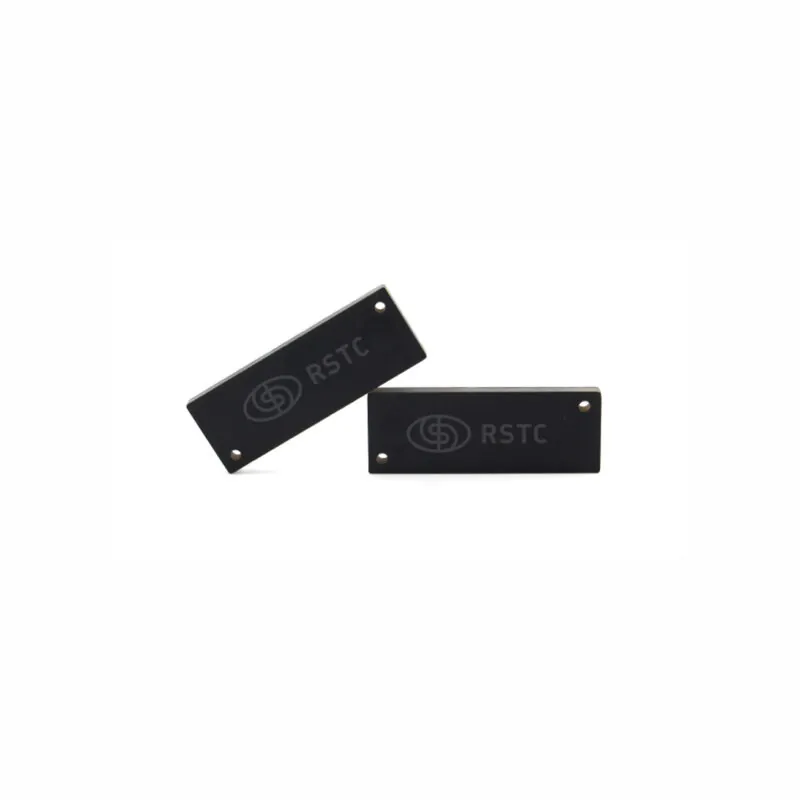
RSTC’s RS-PT04 Industrial PCB On-Metal RFID UHF Tag is designed for metallic asset tracking. It uses an FR-4 construction, supports adhesive or screw installation, and has a published read range of up to 8.5 meters under specified FCC test conditions. Actual performance should still be verified with the intended reader, mounting surface, and operating environment.
When evaluating long range RFID tags, buyers should confirm the intended mounting surface with the supplier. Product descriptions should specify relevant installation requirements and supported applications. If a project involves both vehicle windshields and metal equipment, the purchasing team may need different tag types rather than one product for every asset.
Verify Performance Before Bulk Purchasing
Field trials help confirm whether a product meets the project’s operational requirements. Buyers should test samples on the actual materials and use the planned reader setup. The evaluation should cover reading distance, detection consistency, tag orientation, attachment quality, and installation effort. Results should be recorded under normal working conditions.
For vehicle access systems, tests can examine detection as vehicles approach the entry point. Warehouse projects can check tag readability across loaded racks and different storage positions. Manufacturing teams can test tags on tools, machine housings, and other representative assets. Each trial should reflect the movement patterns and physical conditions of the intended application.
RSTC supplies RFID products for business identification and tracking applications. Buyers can discuss the surface material, read-zone requirements, and installation environment with the supplier when evaluating suitable options. Clear requirements make it easier to compare technical specifications and identify products for further testing.
Make the Decision Based on Application Needs
Selecting a suitable tag for metal surfaces requires more than comparing advertised reading distances. Buyers should confirm metal compatibility, define the required read zone, assess environmental conditions, and test the complete reader setup. These steps help reduce uncertainty before deployment.
For warehouse operators, manufacturers, fleet service providers, and system integrators, long range RFID tags should be selected according to the assets being tracked and the conditions in which they operate. A structured evaluation helps purchasing teams make informed decisions, while matching each product to its intended surface supports more reliable identification in daily operations.
