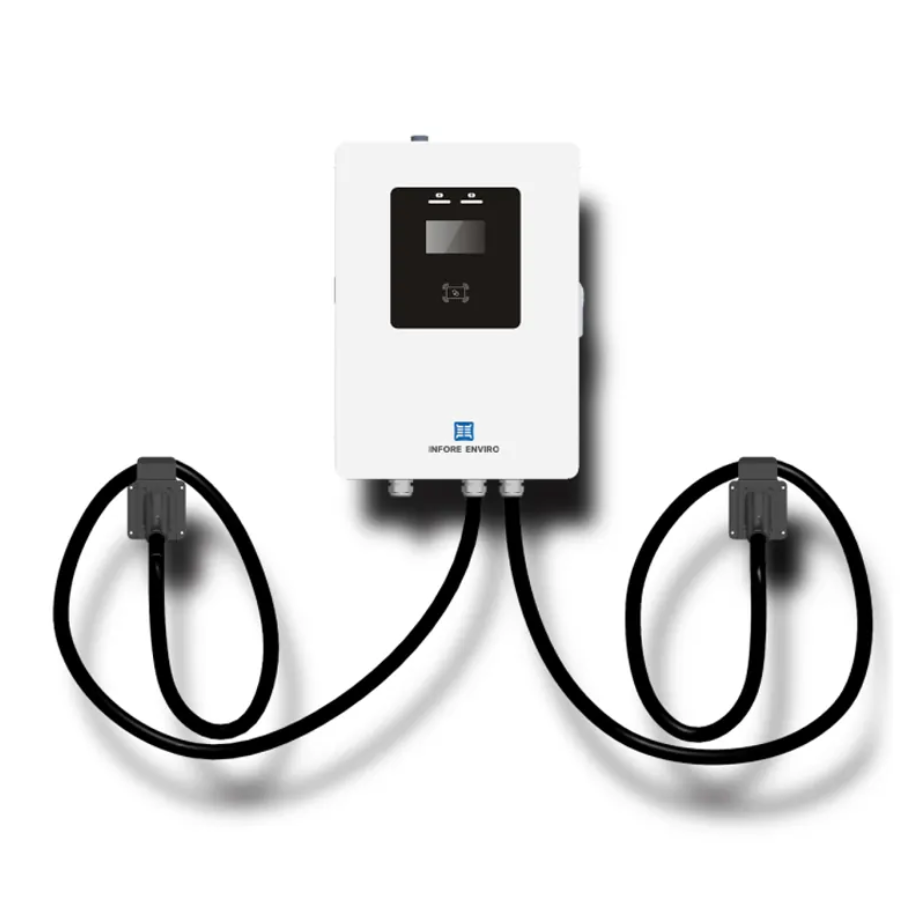
Residential charging projects may look simple, but product selection affects installation cost, daily charging speed, electrical load, maintenance, and future management. For distributors, installers, property developers, and project buyers, choosing a residential EV charger requires more than checking price or appearance. The charger must fit the local power supply, vehicle interface, installation environment, and operating plan.
Careful comparison also reduces problems after deployment. Buyers should review power ratings, compliance, protection, communication functions, and supplier support before placing an order. These five factors provide a practical framework for evaluating products for homes, apartment parking areas, and other residential charging applications.
- Match Charging Power With the Electrical Supply
Charging power should be checked against the available electrical capacity before equipment is selected. Residential AC chargers commonly use different power levels because single-phase and three-phase power conditions vary by market and building. Higher rated power does not automatically mean a more suitable installation.
For example, 7kW, 11kW, and 22kW chargers can serve different residential conditions. Buyers need to review incoming voltage, current limits, cable capacity, and the vehicle’s onboard charging capability. If these factors do not match, the expected charging rate may not be achieved.
This step is especially important in an EV charging installation project, because the charger is only one part of the electrical system. Distribution capacity, protective devices, wiring distance, and simultaneous household loads should be assessed before installation planning begins.
- Check Standards, Connectors, and Market Compliance
Connector type and certification should match the destination market. European residential projects commonly use Type 2 interfaces, while other regions may follow different charging standards. Buyers should confirm the target vehicle type and local regulatory requirements before finalizing the product specification.
Compliance documents also matter for distributors and project contractors. Relevant requirements may include GB/T and 3C for the Chinese market, while products for overseas markets can involve Type 2, CCS2, CE, CB, and RoHS requirements depending on the product category and destination.
For B2B procurement, documentation should be reviewed before shipment rather than after equipment reaches the site. This helps purchasing teams compare quotations on the same technical basis and identify whether certification, connector configuration, and market requirements have been addressed clearly.
- Review Protection for the Installation Environment
Residential chargers may be installed in garages, carports, outdoor parking spaces, or semi-open areas. Exposure conditions can therefore differ greatly. Water resistance and dust protection should be considered together with temperature conditions, mounting position, and cable routing.
The charger enclosure should suit the planned environment instead of being selected only by appearance. Outdoor or exposed installations require more attention to ingress protection, while indoor garages may place more emphasis on space, ventilation, and convenient cable handling.
INFORE ENVIRO supplies charging products with waterproof and dustproof protection for different deployment conditions. They also provide customized development and self-developed manufacturing capabilities, allowing B2B buyers to discuss product configurations according to project requirements rather than treating every residential site as identical.
- Consider Smart Management and Communication
Residential charging is increasingly connected with digital management. Buyers should consider whether the charger needs app functions, scheduling, remote monitoring, user authorization, or connection to a management platform. The required functions depend on whether the unit serves a private home, apartment building, or managed residential parking area.
Support for standard OCPP can be useful when chargers need to communicate with a central platform. It gives operators more flexibility when integrating charging equipment into an existing management system and can simplify later expansion when more charging points are added.
During an EV charging installation project, communication requirements should be confirmed early. Network availability, platform compatibility, user access methods, and future charger quantities can influence equipment selection. Smart functions are more useful when they solve a defined operating need rather than simply increasing the feature list.
- Evaluate Supplier Capacity and After-Sales Support
Product specifications are important, but procurement teams also need to consider production and service capability. Residential charging programs may involve repeated orders, private-label requirements, customized functions, or delivery schedules linked with construction progress.
Factory capacity gives buyers another reference point. A supplier with its own production base can coordinate manufacturing, testing, customization, and shipment more directly. Delivery timing should also be discussed before orders are confirmed, especially when chargers are part of a larger property or distribution plan.
INFORE ENVIRO has a 12,000-square-meter factory and ten years of industry experience. They provide customization and self-production capabilities, with a stated delivery cycle of 30–45 days. Their support arrangement also includes a two-year warranty and 7×24-hour after-sales response, which are practical points for B2B buyers comparing long-term service conditions.
A Practical Buying Decision
Buying a residential EV charger is easier when the decision starts with the site rather than the product catalog. Electrical capacity determines suitable power. Market requirements affect connectors and certification. Installation conditions influence protection needs, while communication functions shape later management.
For B2B buyers, the final comparison should also include production capacity, delivery arrangements, technical documentation, and after-sales support. Reviewing these five areas together helps buyers select equipment that fits the real installation environment. It can also make equipment comparison clearer and reduce avoidable changes during installation, commissioning, and later residential charging management.
