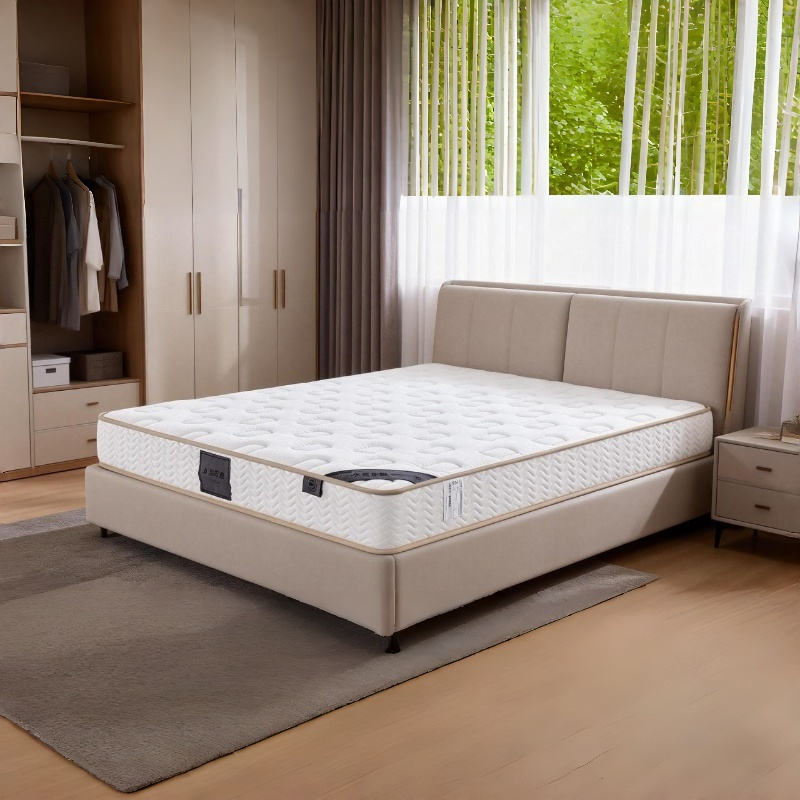
A furniture brand rarely needs a mattress in isolation. The product sits beside beds, room sets, price tiers, and an existing visual identity. Developing a collection means deciding which differences customers should notice and which underlying elements can remain common across models. A series built only by changing covers may lack a clear comfort progression; a series with unrelated constructions can become difficult to explain and replenish.
Collection planning starts with the role of each model. An entry design, a firmer option, and a more pressure-relieving version can share a brand language without making the same promise. The manufacturer then translates those roles into measurable choices: dimensions, spring units, comfort layers, fabric, finished height, and packaging. The work is as much about distinguishing models as it is about creating them.
Give Each Model a Clear Job
The first decision is the assortment map. A brand can list intended sales channels, bed-frame dimensions, customer expectations, and the price position of each proposed mattress. If two models differ only in a feature that customers cannot identify, the overlap may confuse selling and inventory. Custom mattress manufacturers can help turn the assortment map into construction alternatives, but the brand must define why each product belongs in the range.
A mattress collection can also use common components deliberately. Consistent cover details or compatible sizes may support a line, while different support cores create meaningful feel differences. Commonality can simplify communication and replacement planning, yet it should not erase the reason to carry more than one model. The product matrix should show both the shared platform and each model’s distinctive specification.
The term custom mattresses therefore describes a coordinated set of choices rather than unlimited novelty. A small collection with distinct roles may serve a retailer better than a long catalog of minor variations. The design brief can assign an intended sleeper or use case to each model before construction details are negotiated.
Translate Feel Into Construction
Firmness labels alone are imprecise because surface feel and underlying support are different experiences. A softer comfort layer can change initial pressure without changing the spring unit beneath it. Conversely, a support system can alter how the mattress responds across the body while the cover looks identical. Custom mattress manufacturers need a target construction and sample criteria, not only a word such as “medium.”
Suisin Furniture describes zoned designs that vary support around shoulder, torso, hip, leg, and perimeter areas. It also identifies spring wire gauge, coil height, count, spacing, arrangement, and zone layout as ways to adjust response. Those variables make zoning a construction question. A brand should specify where a change is intended and compare actual samples rather than assume that the word “zoned” guarantees one feel.
Foam and other comfort layers contribute another set of choices. Their sequence and thickness affect the transition from surface pressure to deeper support. Fabric affects the visible identity and the immediate contact surface. A development record should name the layer stack and the reason for each variation; otherwise later substitutions can blur the difference between models.
Test the Collection as a System
Sampling one model at a time can hide inconsistencies across the line. A brand needs to place proposed versions side by side, compare heights and covers, and ask whether the intended comfort steps are perceptible. Custom mattress manufacturers can provide samples for this comparison before a bulk decision. The comparison can also reveal when two constructions are so close that the assortment would benefit from a clearer separation.
Suisin Furniture supports OEM and ODM development with more than 50 design engineers, standardized production, samples, and repeated quality inspections. For a collection project, those capabilities matter when each model has its own approved version and inspection points. The factory’s published resources do not replace a model-by-model specification; they provide a basis for discussing how development moves into repeatable production.
Packaging and branding require the same collection-level view. Color, labels, product names, and cartons should distinguish models without contradicting the actual construction. If several sizes share one design, the specification must state which elements scale and which remain fixed. A product family is only coherent if its customer-facing descriptions correspond to the approved physical versions. Different sizes may need separate samples before one comfort description is applied across the entire range.
Keep the Range Manageable
After launch, a furniture brand will learn which models and sizes sell at different rates. Orders and feedback need version identifiers; otherwise, brands cannot link reported results to specific constructions. A shared name applied to changing materials makes performance comments hard to interpret. Custom mattress manufacturers can support later adjustments when the original product records identify what is being changed and why.
The strongest collection has a visible logic: each mattress occupies a defined place, each comfort claim connects to construction, and repeated orders follow approved specifications. Custom mattresses become valuable to a furniture brand when they fit the wider furniture offer and remain distinguishable through sales, production, and replenishment. The collection should read as a deliberate range, not a stack of near-identical products with different labels.
