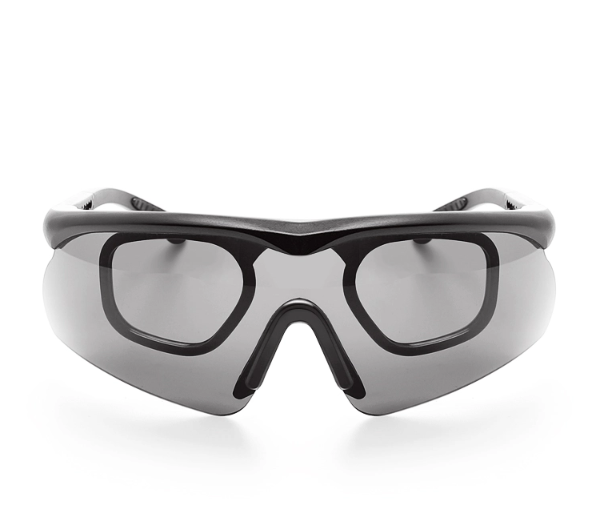
Protective eyewear becomes harder to specify when team members have different vision needs. Shooting clubs, training facilities, and public agencies may purchase one protective style for a group, yet some users need corrective lenses to see targets, instructions, and nearby obstacles clearly.
For procurement teams, prescription tactical goggles involve more than adding an optical prescription to a frame. Buyers must review protection requirements, prescription compatibility, fit, and maintenance. These decisions affect both the purchasing specification and how the equipment performs during routine training. Clear requirements also reduce confusion when different departments review the same purchase.
Why Prescription Compatibility Needs Early Review
Not every protective goggle accommodates prescription wearers in the same way. Some systems use prescription inserts behind a protective outer lens. Others fit over existing spectacles, while certain protective frames accept prescription lenses directly. Each arrangement has different space, fitting, and replacement requirements.
An insert may provide a stable optical position, but its mounting method and available prescription range need confirmation. Over-glasses designs avoid moving a prescription into a separate insert, although bulky spectacles can interfere with fit. Direct prescription lenses require an appropriate protective design and verified performance.
Agencies should first record how many users wear corrective lenses and whether their prescriptions include stronger corrections or astigmatism. This information helps purchasing staff ask suppliers precise compatibility questions before distributing samples for evaluation. Personal prescription details should be handled privately and only where genuinely needed.
Protection Claims Must Match the Intended Activity
Training conditions influence the required level of eye protection. Outdoor drills may involve airborne dust, wind, and debris. Shooting activities introduce different impact concerns. Buyers should define the actual activity and applicable protective eyewear requirements instead of assuming that every product described as tactical offers equivalent protection.
Impact-resistant materials are useful, but a material description alone does not establish compliance with a particular standard. Procurement teams should request model-specific test evidence and identify the standard and version used. Local rules, range policies, and tender documents may set additional requirements. Contract documents should identify who checks the test reports and signs off on samples.
Lens coatings also deserve attention. Scratch resistance can support everyday handling, but it does not make a lens immune to damage. Staff should inspect eyewear regularly and replace lenses or units showing cracks, deep scratches, or impaired vision.
Fit and Visibility During Shared Training
Even suitable lenses can perform poorly when the frame shifts during movement. Buyers should check the fit around the nose, temples, and surrounding facial area. Headwear, helmets, and hearing protection may change how goggles sit against the face, so evaluations should use the equipment worn during actual exercises.
For tactical prescription eyewear, visual clarity depends on optical positioning as well as the corrective prescription. Inserts placed too close to eyelashes can become uncomfortable. Frames that tilt or move may also alter the viewing position. User trials should include looking down, turning quickly, and maintaining a stable stance. Results may differ between users who share the same nominal frame size.
Fogging is another practical concern, particularly when temperatures change or users work hard. Ventilation, compatible anti-fog treatments, and cleaning practices can influence visibility. Buyers should ask whether the specific model has verified anti-fog features rather than assuming those features are standard.
What a Product Example Can Tell Buyers
After defining these needs, purchasers can compare available models against their specification. YIJIA Optical offers the YL737 tactical shooting goggles, described with a polycarbonate frame and polycarbonate lenses. The stated lens thickness is 2.0 mm, with scratch-resistant and impact-resistant features.
Likewise, the listed impact-resistance feature should not be treated as proof of a specific certification. Purchasing staff can ask for product testing documentation, fitting samples, and written details on permitted accessories. These records are more useful for approval than a broad product description. Procurement officers should keep the accepted sample configuration linked to the purchase order.
Build a Procurement Process Around Actual Users
Group orders work better when purchasing teams separate mandatory protection requirements from comfort preferences. The first document should identify activities, relevant standards, user numbers, corrective-vision needs, and equipment worn alongside the goggles. This gives suppliers a consistent basis for quotations.
Sample evaluations should involve several users rather than one purchaser. Record whether frames stay in place, create pressure points, interfere with hearing protection, or obstruct peripheral vision. Ask prescription wearers to test only configurations that the supplier confirms as compatible and appropriate for the intended use.
For repeat orders, buyers also need to document size or fitting options, cleaning guidance, replacement parts, and delivery arrangements. When discussing prescription tactical goggles, they should clarify whether corrective inserts, if supported, are included, separately sourced, or fitted by a qualified optical provider.
A Clearer Route to Group Selection
Agencies and clubs do not need identical corrective-vision arrangements for every participant. They need protective equipment that meets their activity requirements and a documented way to accommodate prescription wearers. Clear user records, model-specific evidence, and supervised sample trials make that decision easier to defend.
YIJIA Optical can discuss frame specifications and branding requests for group purchasing. Before ordering, teams evaluating tactical prescription eyewear should confirm prescription compatibility, relevant protection documentation, and the exact configuration to be supplied. Those checks help turn a general eyewear inquiry into a usable procurement specification.
