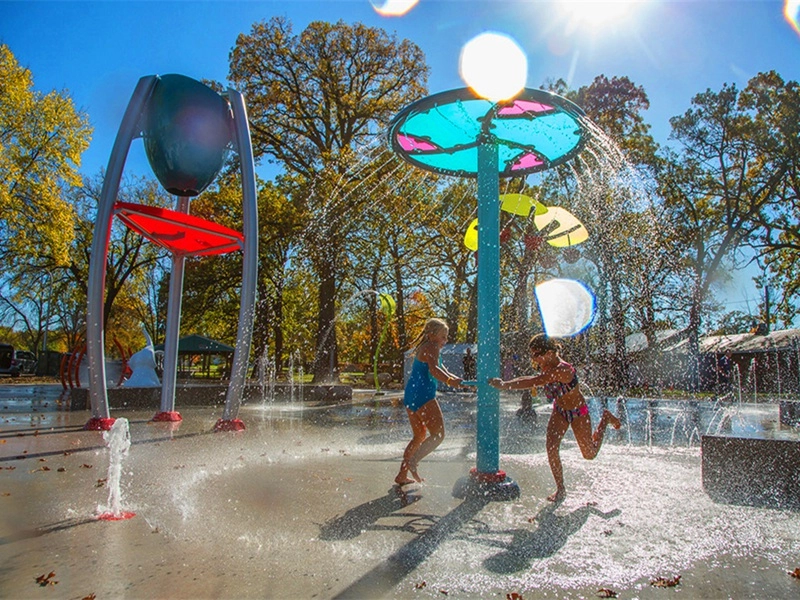
Operators asking about dog splash pads are usually asking an equipment question: what can be installed, what will last, and what will be easy to keep clean. Dogs are harder on water features than children in some ways, with claws, fur, and unpredictable movement, and the equipment list should reflect that from the start.
The concept also opens a broader discussion about facility design, hygiene, accessibility, and operating models. Jinchao’s experience in water park planning and equipment manufacturing provides useful industry context for examining how aquatic recreation can adapt to new visitor needs.
Choose Materials That Suit Dogs and Frequent Cleaning
Surfaces and fittings should resist scratching, repeated wetting, and cleaning chemicals. Stainless steel and fiberglass components are common choices for aquatic play equipment because they tolerate constant moisture, and smooth finishes are easier to wash than textured ones that hold hair and dirt.
Spray features need the same scrutiny. Low, rounded nozzles and protected pipework reduce the chance of injury or damage from enthusiastic dogs, while recessed or lockable components keep fittings from being chewed or pulled. Features that rotate or change direction can add interest without complicated moving parts at paw level.
Layout affects wear as well. Separating high-energy play from quieter edges, and adding durable shade and seating for owners, spreads use across the pad instead of concentrating it on a few fixtures. Equipment can then be sized and replaced according to real use patterns.
Design Around Canine Behavior and Owner Safety
Dogs interact with water differently from children. Some may jump directly into shallow water, while others prefer gentle sprays or gradually entering wet areas. This makes circulation routes, water depth, surface texture, shade, escape paths, and owner visibility important design considerations. Dog water park equipment should be arranged around predictable movement rather than simply adding conventional aquatic features to an open space.
Surface selection deserves particular attention. Wet flooring needs sufficient traction for animals and people, while edges and transitions should avoid unnecessary obstacles. Drainage must also prevent persistent standing water, since damp areas can increase cleaning demands and create unpleasant conditions between operating periods.
Supervision is another part of the physical layout. Owners should be able to observe their dogs without blocking other visitors, and access points can be arranged to separate entry and exit movements where space allows. Clear circulation becomes especially valuable when dogs of different sizes and activity levels share the same facility. A well-planned dog splash pad can use zoning to create quieter areas alongside more active play spaces.
Build Hygiene Into the Operating Model
The equipment used in a splash pad can influence both the play experience and maintenance requirements. Jinchao’s Kids Aqua Play range features stainless steel and fiberglass structures designed for interactive water play. While these facilities are primarily designed for children, selected features may also be suitable for dogs to enjoy under appropriate conditions. When adapting children’s water play equipment for pet-friendly spaces, factors such as material durability, surface safety, water depth, and ease of cleaning should be carefully evaluated.
Cleaning schedules should be based on actual usage and environmental conditions rather than fixed intervals alone. Busy days, hot weather, dog hair, and muddy paws can increase debris and cleaning needs. Regular checks of water clarity, filtration, and drainage, along with routine cleaning, can help maintain a clean and enjoyable environment. For dog-friendly splash pads, additional hygiene measures and maintenance procedures should be established to accommodate pets’ specific needs.
Turn the Concept Into a Sustainable Business Model
Revenue planning should extend beyond admission fees. Operators might consider timed sessions, memberships, seasonal passes, partnerships with pet businesses, private events, or bundled access with other leisure services. The appropriate model depends on the property’s audience and local competition, so demand testing can be more useful than assuming that every pet attraction will produce the same financial result.
Operational expenses also deserve careful attention. Water treatment, electricity, cleaning labor, equipment inspection, surface upkeep, waste management, insurance, and seasonal preparation can all affect profitability. A water park manufacturer may provide equipment specifications and installation information, but operators still need to develop procedures suited to their own visitor volume and site conditions.
Conclusion
The growth of pet-oriented recreation reflects a wider shift toward leisure spaces that suit different households. A dog splash pad succeeds when its materials, drainage, water treatment, and cleaning routines are specified for animal use rather than borrowed from a children’s design. Operators who settle these equipment questions early have far fewer surprises after opening.
Operators evaluating a dog splash pad can begin by defining the intended audience, identifying suitable site conditions, and estimating both peak and off-season demand. Technical discussions with a water park manufacturer can then help clarify equipment requirements, material options, installation considerations, and ongoing maintenance needs. The role of Jinchao in water park manufacturing and project development offers one industry reference for examining these technical factors without treating the attraction as a one-size-fits-all solution.
Market potential ultimately depends on how well the facility fits its surrounding community. A carefully planned dog water park equipment area can create an additional recreational offering, while thoughtful water management and clear operating procedures can support consistent day-to-day use. For operators exploring new leisure concepts, the appeal of pet-focused water recreation lies not simply in adding another attraction, but in creating a dedicated experience around a clearly defined and increasingly visible visitor need.
