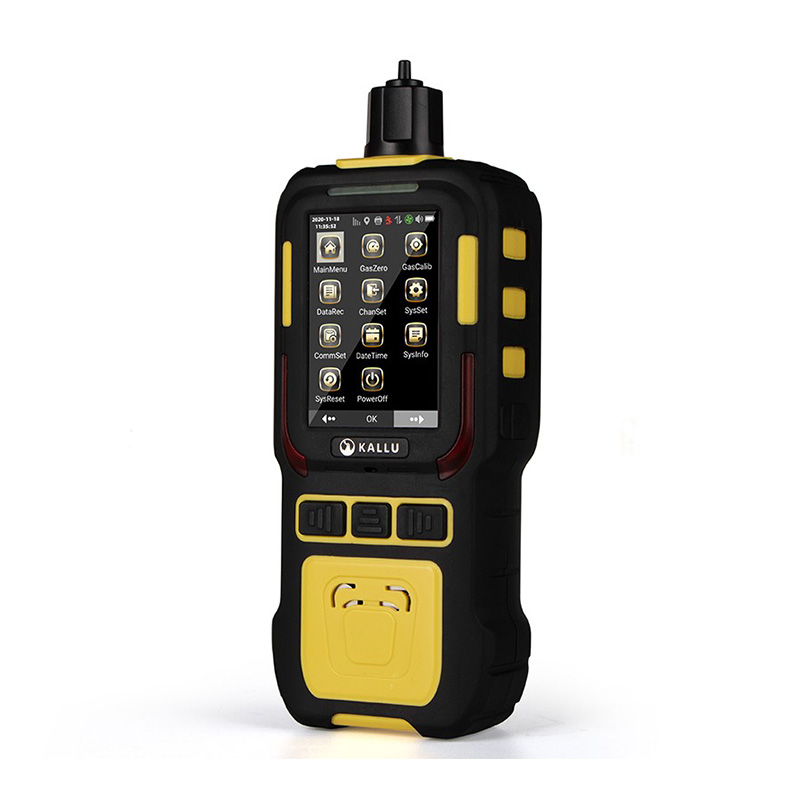
Beside an extraction well, a fitting, a technician’s breathing zone, and the inside of the collection pipe are three different sampling locations. A portable gas detector configured for work-area checks can measure selected gases in the air around the well. Its readings describe the sampled location and depend on having suitable channels, ranges, and sampling conditions.
The point names used on a site sketch can prevent a short label such as “well reading” from obscuring what was measured. The name directs a follow-up crew to the point that produced an unexpected reading, even if several readings share the same well number.
Give Each Point a Reason for Being Sampled
At a work position, the question is what air a person could encounter while doing the assigned job. Near a fitting, the question may be whether the air changes close to the equipment. Inside the extraction pipe, process sampling can address the composition of the collected gas or help operators assess well performance.
The distinction shapes what a crew takes around the site. To keep multi gas detectors portable between wells, crews can plan the route around a configured instrument and the accessories required for its named points. A process sample requires a separate specification for the gas stream. The examples that follow concern the surrounding air.
Assign a Measurement to Each Gas of Interest
Methane and carbon dioxide are major components of landfill gas, and their presence in the same source gives rise to separate measurement questions in surrounding air. A channel chosen for methane flammability indicates how the air sample compares with the instrument’s combustible gas reference. Tracking carbon dioxide by volume calls for a separate measurement specific to that gas.
An oxygen measurement can address changes in the oxygen content of the air. Where the site assessment identifies hydrogen sulfide or carbon monoxide, each gas needs its own appropriate channel and range. The resulting specification for a portable gas detector links every selected channel to an anticipated condition at the point on the survey.
Compare the Ranges of an Actual Configuration
Range, resolution, and unit make a comparison specific enough for the field task. Range states the span of concentrations the channel covers. Resolution is the smallest increment shown in the specification. A combustible reading in %LEL and a carbon dioxide reading by volume use different scales, so each is evaluated against its own measurement requirement.
Fitting several channels into one instrument can make multi gas detectors portable enough for a route with multiple stops. A route that needs readings for both carbon dioxide and combustible gas can specify both targets on an order for a Bosean K-600M. It displays up to six configured readings from pumped sampling, with ranges that depend on the selected channels.
In one example configuration, combustible gas spans 0–100% LEL in increments of 1% LEL, and carbon dioxide spans 0–5% by volume in increments of 0.01% by volume. The same example lists 0–30% by volume for oxygen, 0–100 ppm for hydrogen sulfide, and 0–1,000 ppm for carbon monoxide. Each range needs to cover the concentrations relevant to the work-area survey.
Let the Sampling Point Govern the Hose Setup
Where a planned point is difficult to reach, a probe and hose can place the inlet there while the instrument stays with the technician. The sampling arrangement has to follow the procedure for the location. A hose adds a transport interval before the sample reaches the portable gas detector, and the channels need time to respond once it arrives.
For a Bosean K-600M example, the available pump settings and the pump fault warning are relevant checks. The suitable setting depends on the specified hose and sampling arrangement. Tubing length and material matter as well, because the time and quality of sample delivery affect how the reading can be interpreted.
During a round, the hose inlet can shift from the assigned point if its position is hard to see. Recording its actual position and any sample fault ties the result to the way it was obtained. A value from a different height or from the opposite side of the equipment can represent different air even under the same well identifier.
Make the Next Check Comparable
When a reading prompts another visit, the receiving crew needs to know which point to revisit and what was happening there. An entry can pair the well identifier with the point description, time, gas channels and units, and the status of the extraction equipment during the observation. This gives the next check a defined basis for comparison.
Built-in recording can keep multi gas detectors portable during longer rounds by reducing the need for a separate logger in the field. On a Bosean K-600M, a manually saved reading can mark an observation at a named stop. Timed storage can capture changes over a longer observation while the inlet stays at one point.
A follow-up made after the extraction equipment returns to service answers a different operating question from an observation made during the interruption. Knowing which air was sampled and how the instrument was set up lets the crew repeat the observation under comparable conditions or document what has changed since the first reading.
SEO Title: Portable Gas Detection at Landfill Extraction Wells
Meta Description: See how landfill gas extraction well checks use different sampling points, sensor ranges and hose setups to document comparable readings.
