Commercial LED displays help businesses deliver presentations, promote products, and communicate information effectively. However, the purchase price is only part of the total investment. Structural support, electrical upgrades, control equipment, and labor can significantly increase the final cost. Understanding these expenses helps businesses budget accurately when installing LED wall panels.
- Structural Support and Mounting
One frequently overlooked expense is the structure needed to support a commercial display. Depending on the installation location, businesses may need reinforced walls, steel frames, mounting brackets, or freestanding supports.
Large LED wall panels can place considerable loads on supporting structures. Outdoor installations may also require engineering assessments to account for wind exposure and weather conditions.
Before purchasing, businesses should evaluate the mounting surface, cabinet dimensions, weight, and installation requirements. Lightweight cabinets can simplify handling, but suitable structural support remains essential.
- Electrical Infrastructure and Power Supply
Commercial displays require safe, reliable electrical connections. Existing infrastructure may not support a new installation, particularly in older buildings or outdoor advertising locations.
Additional expenses may include new circuits, power distribution equipment, protective devices, cables, grounding, and electrician labor. The actual requirements depend on the display’s maximum power consumption and operating conditions.
Businesses should calculate electrical requirements using official product specifications rather than estimating from screen size alone. Assessing the existing power supply before installation can help prevent expensive last-minute upgrades.
- Controllers, Cabling, and Signal Distribution
An LED panel needs suitable control equipment to display content correctly. Depending on the project, this may include sending controllers, receiving cards, video processors, signal cables, and content playback systems.
Large installations can require additional equipment to distribute signals across multiple cabinets. Corporate boardrooms and broadcast studios may also need integration with cameras, computers, and existing audiovisual systems.
Before accepting a quotation, buyers should confirm which components are included. Checking equipment compatibility and configuration costs helps avoid unexpected expenses.
- Installation Labor and Site Preparation
Installation costs vary according to display size, mounting height, site accessibility, and project complexity. A straightforward indoor installation may require less labor than a large commercial video wall in a busy retail environment.
Additional expenses can include removing old equipment, preparing mounting surfaces, renting lifting equipment, and arranging installation outside business hours. Safety measures and commissioning may also increase labor costs.
Businesses should request itemized quotations that separate equipment, transportation, installation, and testing. This makes it easier to compare suppliers and identify excluded services.
- Cooling, Environmental Protection, and Maintenance
LED displays generate heat during operation. Depending on the installation environment, adequate ventilation or additional cooling may be necessary. Outdoor installations may also require suitable weather protection and easier access for maintenance.
Future servicing is another important budget consideration. Damaged modules, replacement components, and technician visits can increase ownership costs if maintenance arrangements are unclear.
Before selecting LED wall panels, buyers should check warranty coverage, spare-part availability, and whether modules can be accessed from the front, rear, or both sides. Planning for maintenance in advance can help minimize downtime.
How to Control Installation Costs
Businesses can reduce unexpected expenses by evaluating the complete project before purchasing equipment.
- Conduct a site survey: Assess mounting conditions, access routes, and environmental requirements.
- Verify specifications: Check cabinet weight, power consumption, pixel pitch, and maintenance access.
- Compare quotations: Confirm whether controllers, cabling, mounting hardware, installation, and testing are included.
- Plan for maintenance: Consider spare modules, warranty terms, and repair expenses.
- Set aside contingency funds: Allow for unexpected infrastructure changes or site conditions.
These steps help businesses compare the total project cost rather than focusing exclusively on the display’s purchase price.
Choosing LED Wall Panels From Coblinks
Coblinks is a professional LED display manufacturer based in Shenzhen, China, with over 10 years of industry experience. Its product range includes indoor and outdoor rental displays, fine-pitch commercial screens, and creative solutions for retail, corporate meetings, and event production.
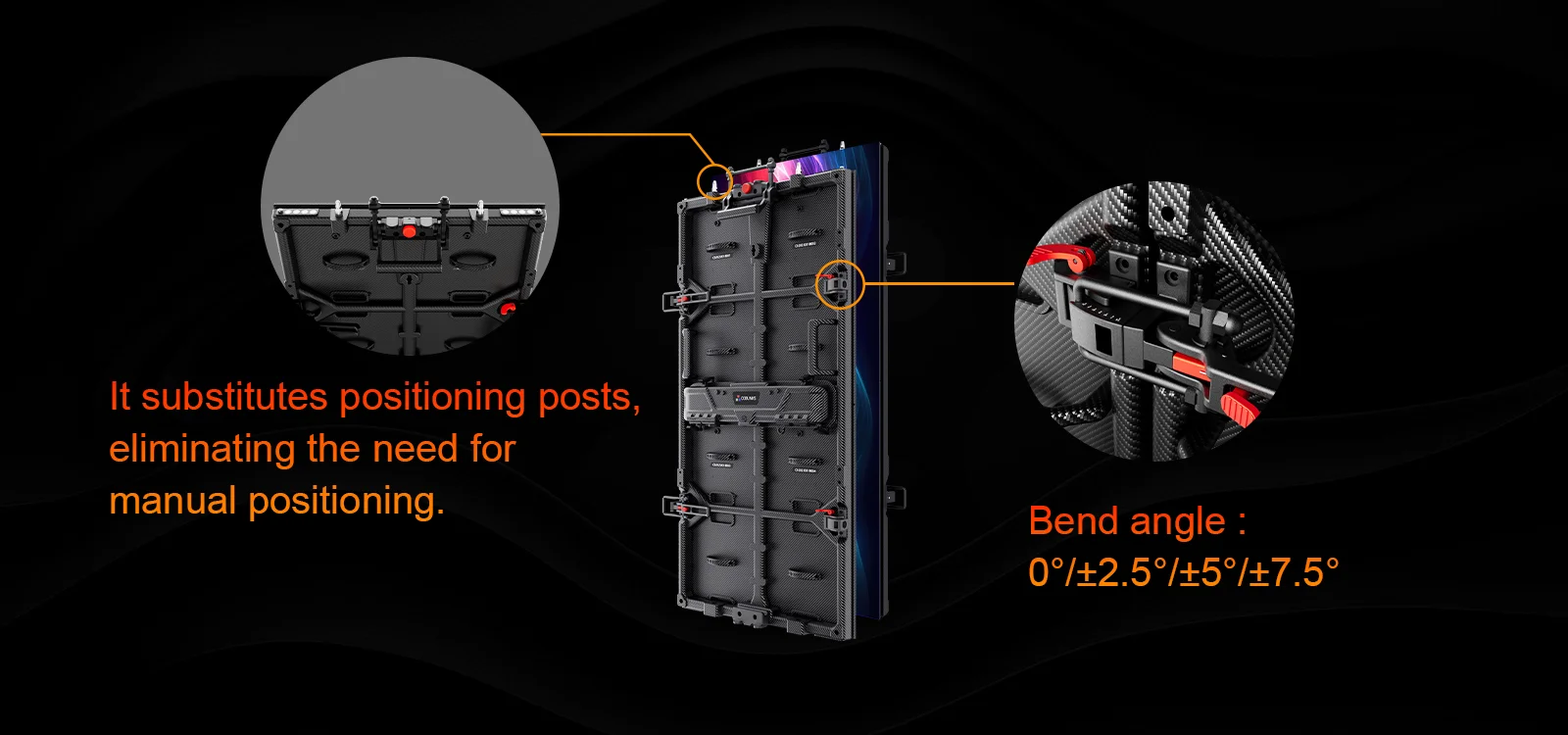
The Coblinks CL Series carbon-fiber rental display offers indoor pixel pitches of P1.9, P2.6, and P3.91, with outdoor options of P2.9, P3.91, and P4.81. Its cabinets measure 500 × 1,000 × 45 mm. Indoor cabinets weigh 8.5 kg, while outdoor cabinets weigh 9 kg. The series supports front and rear module maintenance.
These features help project planners assess handling requirements and servicing flexibility. However, mounting systems, electrical infrastructure, and installation expenses must still be evaluated for each site.
When considering LED wall panels, businesses should confirm the included components, available technical support, and maintenance requirements with Coblinks before finalizing their budget. On-site installation costs and responsibilities should also be clarified with the project’s installation contractor.
Conclusion
The hidden costs of commercial LED wall panels include structural support, electrical upgrades, control equipment, labor, environmental protection, and ongoing maintenance. Careful site assessments, accurate specifications, and itemized quotations help businesses avoid unexpected expenses. By evaluating installation requirements alongside product performance, organizations can make informed purchasing decisions and achieve better long-term value from their LED display investments.
