The label “best” can be misleading when applied to energy storage because battery performance depends heavily on the system in which the battery operates. A household focused on outage protection may value long autonomy, while another installation may prioritize daily cycling, compact installation, later expansion, or compatibility with an existing inverter.
The best solar power storage batteries are therefore identified through comparison rather than through a single specification. A solar battery storage system should be assessed across chemistry, usable capacity, cycle life, power capability, communication, installation format, monitoring, and expansion potential before one model is judged more suitable than another.
Start With Usable Energy and Cycle Expectations
Nameplate capacity provides only an initial reference. The more useful question is how much energy can be repeatedly charged and discharged under the intended operating conditions. Battery chemistry, permitted depth of discharge, and cycle rating all influence that answer.
LiFePO4 batteries used in GSOpower home-storage products are listed for more than 6,000 cycles at 80% depth of discharge, with a stated design life of 10 years. These figures are relevant because the best solar power storage batteries for frequent cycling need to maintain useful capacity through repeated daily operation rather than merely provide a large nominal energy figure.
Energy calculations also help place capacity in practical terms. A 48 V, 100 Ah battery has 4.8 kWh of nominal energy because voltage multiplied by amp-hour capacity gives watt-hours. That number can then be compared with household consumption and desired backup duration. A capacity figure without a load profile does not show how long the battery will actually support a property.
Usable capacity also needs to be separated from nominal capacity. A battery can carry a large nameplate energy figure while a smaller portion is intended for routine cycling, so permitted depth of discharge, charge/discharge rate and expected cycling pattern change how much of that rating is practically available.
System Compatibility Can Matter as Much as Capacity
A battery must communicate and operate correctly with the inverter responsible for charging, discharging, and power conversion. A solar battery storage system can therefore be limited by protocol compatibility even when battery capacity appears adequate.
GSOpower batteries include a pre-loaded inverter protocol library that allows the relevant inverter brand to be selected during commissioning. The compatibility library covers multiple commonly used inverter platforms for system integration. This type of protocol support reduces the risk of treating the battery and inverter as unrelated purchases.
Expansion is another system-level consideration. Parallel configurations with automatic addressing permit additional modules to be added within the same product family without manually assigning individual battery IDs. For installations expected to grow, the best solar power storage batteries may be those that support a staged capacity plan rather than forcing the property owner to purchase all future storage on the first day.
Installation Format Changes the Practical Fit
Electrical specifications alone do not determine whether a battery is suitable for a particular property. Available wall space, floor area, access routes, service requirements, and future relocation can influence the preferred form factor.
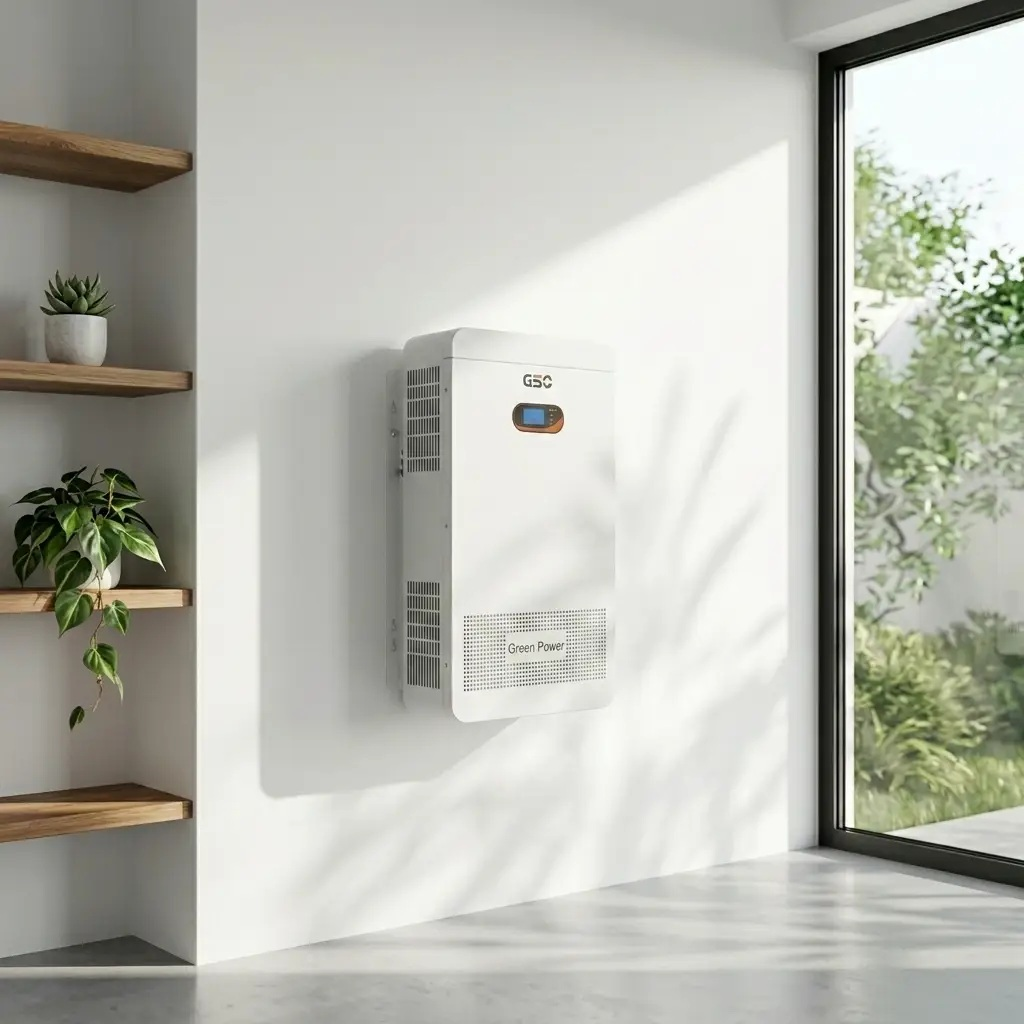
GSOpower offers wall-mounted, wheeled and stacked residential battery formats while retaining LiFePO4 chemistry and a common communication concept across the range. A wall-mounted battery may suit a location where floor space is limited, while a wheeled cabinet can provide greater placement flexibility. Stackable systems can be useful where modular expansion and integrated installation are priorities.
The physical arrangement should also match environmental conditions. Protection rating, indoor or outdoor placement, temperature range, cooling method, and installation labor all affect long-term practicality. A solar battery storage system that performs well electrically may still be a poor choice if its enclosure or installation requirements do not match the site.
Switching, Monitoring and Daily Operation
Storage becomes most valuable when control functions support the way electricity is actually consumed. In a typical solar-plus-storage arrangement, PV generation serves active loads first, surplus electricity charges the battery, and stored energy is released later during evening demand, outages, or high-tariff periods.
Some integrated GSOpower configurations list grid-to-battery transfer times below 10 ms, helping maintain power continuity when the operating mode changes. Battery and power-flow status can also be monitored through the inverter APP or cloud platform.
These functions matter because the best solar power storage batteries are not only energy containers; they form part of a controlled system that must respond to changing solar production, grid conditions, and household demand.
System-level conversion efficiency, charging and discharging rate, monitoring functions, and BMS protection should therefore be reviewed alongside capacity and cycle life. Smart BMS functions supervise operating conditions and provide protection against abnormal charging or discharging behavior.
A useful comparison does not begin by asking which battery has the largest number on its specification sheet. It begins with the load profile, desired autonomy, installation environment, inverter platform, and expected cycling pattern. From there, chemistry, usable capacity, cycle life, communication, physical format, monitoring, and expansion can be evaluated as connected factors.
The best solar power storage batteries are consequently those that fit the complete application, while a well-designed solar battery storage system turns those specifications into reliable daily operation rather than isolated technical claims.
