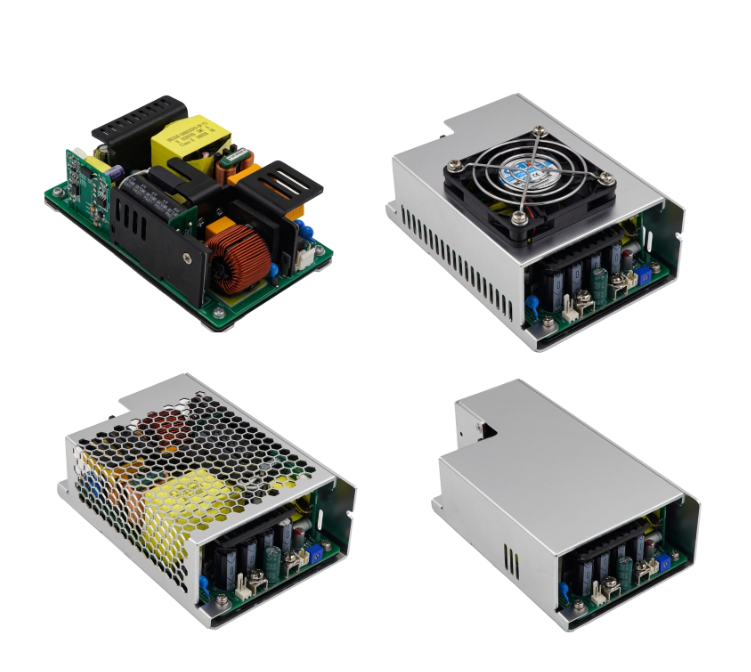
A switching power adapter converts electrical energy from an input source into a controlled output that electronic equipment can use. Unlike a simple voltage transformer, it combines switching circuits, rectification, filtering, feedback control, and protection functions to regulate power efficiently. This architecture is widely used in industrial equipment, communication systems, medical devices, and other professional electronics because it can provide stable output while keeping the power unit relatively compact. Understanding how it works also helps equipment manufacturers evaluate safety and integration requirements more effectively.
What Is the Main Function of a Switching Power Adapter?
The primary function is to convert available input electricity into a voltage and current suitable for the connected equipment. For an AC input product, the incoming power is typically rectified into DC, switched at a high frequency, transferred through the conversion stage, and then filtered and regulated before reaching the output.
A feedback circuit continuously monitors the output condition and adjusts the switching operation when the load or input changes. This allows the adapter to maintain the required output within its specified operating range.
The high-frequency switching process also provides an important structural advantage. Compared with conventional linear conversion methods, switching technology can achieve higher conversion efficiency and reduce the size of magnetic components. This can make the power unit easier to integrate into equipment where available space and heat dissipation are limited.
How Does the Power Conversion Process Work?
A typical switching adapter contains several functional stages. The input section may include protection components and filtering circuits before the AC voltage is rectified. The resulting DC voltage is then controlled through a switching device operating at high frequency.
A transformer may provide electrical isolation and change the voltage level. On the secondary side, the transferred energy is rectified and filtered to create the required DC output. A feedback system then compares the actual output with the target value and adjusts the switching circuit when necessary.
Each stage has a specific role. Input protection helps deal with abnormal electrical conditions, switching components control energy transfer, the transformer can provide isolation, and output filtering helps reduce unwanted voltage variation and electrical noise.
This combination allows an open frame switching power supply to provide controlled power without requiring a large linear regulating stage. However, actual performance depends on the circuit architecture, component selection, load conditions, and thermal environment.
Why Is Switching Technology Useful for Professional Equipment?
Professional equipment often needs to operate for long periods while maintaining predictable electrical performance. Power conversion losses can become heat, so efficiency has a direct relationship with thermal management.
A switching design can reduce unnecessary energy loss compared with less efficient conversion methods. Lower losses can help limit temperature rise inside the equipment and may provide designers with more flexibility when arranging other electronic components.
The technology can also support a broad input range and different output configurations. These characteristics are useful for manufacturers developing equipment for different markets or applications, where input conditions and output requirements may vary.
However, efficiency should not be evaluated separately from safety and EMC. Increasing switching frequency or reducing component size can introduce new design challenges, including electromagnetic noise and thermal concentration. Good power design therefore requires these factors to be considered together.
What Safety Functions Does a Switching Adapter Need?
Safety is not a secondary function of a power adapter. Protection circuits are normally designed to respond to conditions such as excessive current, output over-voltage, short circuits, or excessive temperature.
Electrical isolation is another important consideration. In isolated switching architectures, the transformer provides separation between the primary and secondary sides. The insulation system, creepage and clearance distances, and other construction details must correspond with the applicable safety requirements.
For medical and professional applications, leakage current can also be an important specification. Equipment manufacturers need to check whether the selected power solution is appropriate for the safety category of the final product.
EMC is closely related to safety and system reliability. Switching circuits can generate high-frequency noise, so filtering, grounding, PCB layout, shielding, and switching control need to be considered during development.
Why Does an Open-Frame Design Require Careful Integration?
An open-frame power module does not normally have the same external enclosure as a desktop adapter. Instead, it is designed to be installed inside the customer’s equipment. This can save external space and provide greater flexibility for machine designers.
However, the equipment enclosure becomes part of the overall integration environment. Engineers need to consider insulation barriers, accessible parts, mounting arrangements, airflow, surrounding components, and cable routing.
The UES500-SPAZ-OP series is designed for industrial, communication, and medical applications. It supports an 80–264V AC input range, 2 MOPP isolation protection, and leakage current of ≤100μA. It also supports Energy Efficiency Level VI and standby power consumption of ≤0.5W.
The series provides up to 320W with convection cooling and up to 500W with user-provided forced-air cooling. This illustrates why rated power cannot be considered independently from cooling conditions. The actual installation environment determines which operating configuration is appropriate.
What Should Engineers Check Before Integration?
Before selecting an open frame PSU, engineers should first calculate the equipment’s expected load and confirm the required input and output specifications. They should then review temperature conditions, cooling methods, insulation requirements, EMC considerations, mounting space, and relevant certifications.
The difference between normal load and peak load should also be considered. A device may have a relatively low average power demand but require additional current during startup or when several modules activate simultaneously.
Thermal testing should be performed under realistic operating conditions. Measuring temperatures at the adapter and surrounding components can help identify whether the available airflow is sufficient.
For customized equipment, sample testing with the actual system is particularly useful. It allows engineers to evaluate electrical behavior, mechanical fit, EMC interaction, and thermal performance before mass production.
Choosing a Suitable Power Architecture
The right power architecture depends on the equipment rather than the adapter alone. Medical applications may place greater emphasis on isolation and leakage current, while communication systems may require careful EMC control and stable output. Industrial equipment may place additional emphasis on temperature, continuous operation, and installation conditions.
UE Electronic develops power solutions for industrial, communication, and medical applications. Evaluating the power architecture together with the complete equipment design can help manufacturers identify the appropriate specifications before production.
An open frame PSU can provide useful integration flexibility, but its advantages depend on correct installation, cooling, insulation, and protection design. Engineers should therefore review the complete electrical and mechanical environment rather than selecting a unit only according to rated wattage.
Conclusion
A switching power adapter does more than change one voltage into another. Its switching circuit controls energy transfer, its transformer and insulation system can provide electrical separation, its feedback circuit regulates output, and its protection functions help respond to abnormal conditions.
For professional equipment manufacturers, understanding these functions makes power selection more practical. Efficiency, output stability, EMC, thermal behavior, isolation, and protection should be evaluated together. When these factors are matched with the final equipment structure and operating environment, the power solution can provide a more suitable foundation for industrial, communication, and medical electronic systems.
