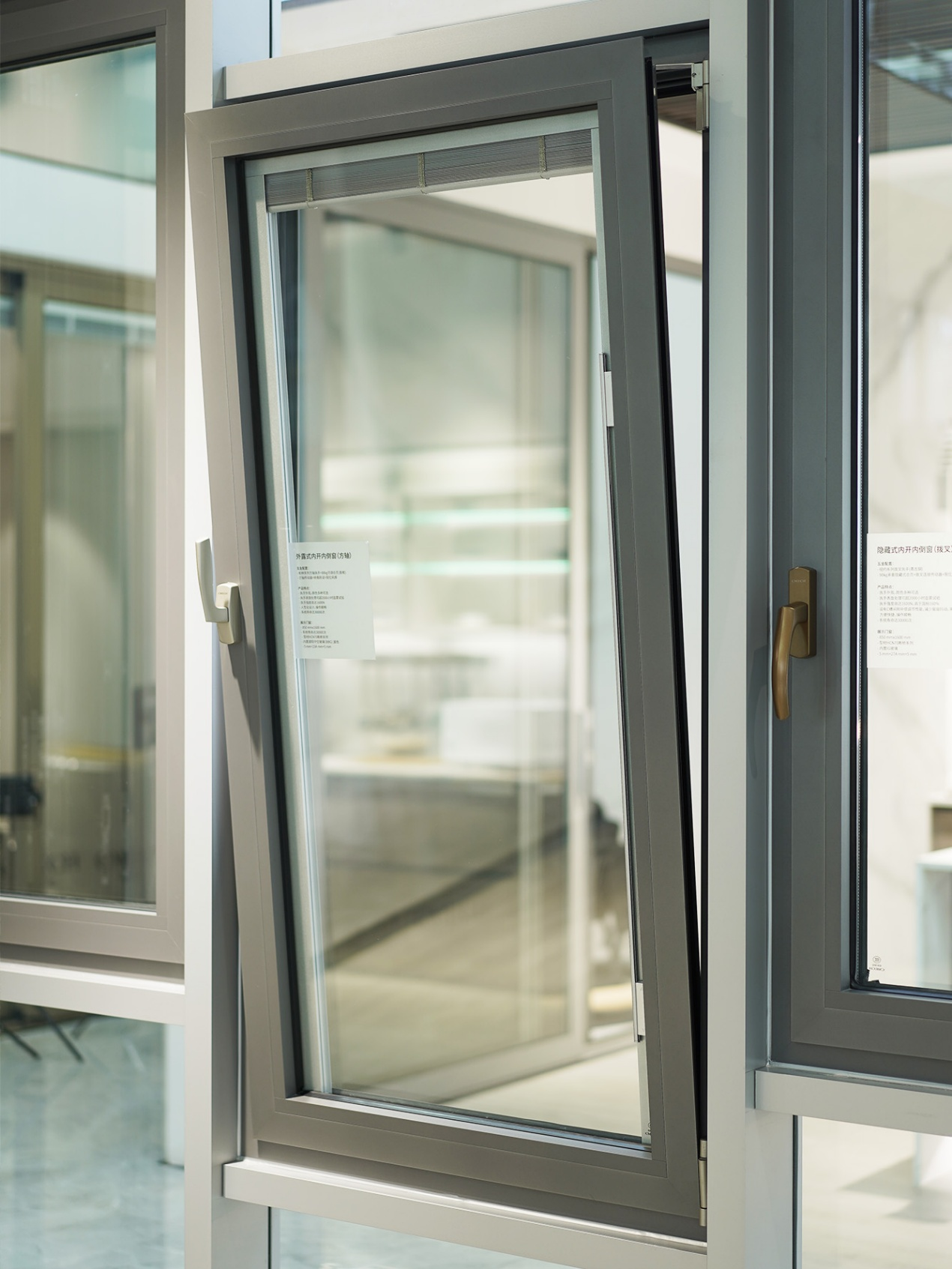
Choosing a window usually starts with glass, frame and color. The parts behind the frame get less attention, yet they shape how the sash opens, how it seals and how it holds up after thousands of cycles. Window hardware covers handles, gearboxes, hinges, locks, keepers and supporting blocks, and each one has to suit the sash’s size, weight and opening style. This guide goes through the main components and the questions worth asking before a specification is final, using product data from CMECH, a door and window hardware manufacturer.
Start With the Opening Type
The opening style sets which components are needed. Outswing casement windows swing outward on friction hinges. Tilt and turn windows open inward in two ways and rely on a gearbox, corner drives and a tilt bolt. Sliding windows travel on rollers instead of hinges. Awning windows hinge at the top, and CMECH lists an outswing awning window among its window hardware categories. Because each style uses a different parts set, a handle or hinge that suits one rarely transfers to another.
Every system also carries an applicable range covering sash width, sash height and load-bearing capacity. These three figures narrow the choice quickly, so they are worth checking first.
Handles and Drive Gearboxes
The handle is the part touched every day, and the gearbox behind it moves force to the rest of the hardware. Quality here shows up as smooth turning with little play. CMECH offers Milan Series and Venice Series handles, both recognized with Red Dot and iF design awards. The Milan Series handle is base-free, while the Venice Series is offered in small-base and round-base versions. The Master Series casement hardware uses a triangular fixation system intended to keep the handle steady.
The Master Series spindle drive gearbox is cast as a single zinc alloy unit with 25 N·m of torsional resistance. It has been tested through 30,000 open-and-close cycles and includes a 12.5 mm anti-drift nut for bidirectional adjustment. Gearbox center distance is a specification point in its own right, with options of 11, 13, 22, 25, 28, 30 and 35 mm for the Master Series. Tilt-and-turn systems use a dual-gear drive with a stainless steel faceplate as part of their operating mechanism.
Hinges and Load-Bearing Parts
Hinges carry the sash weight, so load rating is the headline figure. The Master Series C-groove friction hinge uses 304 stainless steel and a 4 mm load-bearing arm, with a stated load capacity of up to 60 kg for the specified hinge configuration. It adds a triple safety linkage and a typhoon-resistant stopper, and has passed more than 30,000 repeated operation tests. Fly screen hinges come in 90°, 165° and 180° opening angles to match ventilation needs.
Tilt and turn windows ask more of their hinges. CMECH concealed hinges are available for tilt-and-turn configurations with sash loads of up to 130 kg. The permitted load and adjustment features depend on the specific hinge configuration. Sliding windows replace hinges with rollers. In the Sliding Window Hardware Solution, rollers support 120 kg to 300 kg, and their rubber-coated wheels have passed 120,000 cycles.
Locks, Keepers and Sealing Parts
Locks and keepers hold the sash closed and influence how tightly it meets the frame. A multi-point lock engages the frame at several positions instead of one latch, which supports both security and weather sealing. In the Master Series, the lock side includes a pry-resistant end lock point with bearing and pry-resistant keepers. Tilt and turn systems add a tilt bolt, tilt striker, corner drive and fail-safe corner drive, while a sash support block and drain cover support the assembly.
Sliding windows have their own set. The S Metro handle, a Red Dot award recipient tested to 25,000 cycles, includes a child safety lock and a self-adjusting hook with ±3 mm of tolerance compensation. The raised Metro handle suits narrow-profile frames and is designed to avoid finger pinching. A bump lock recessed pull handle is also available for one-touch locking.
CMECH Window Hardware by System
CMECH brings nearly 30 years of experience to the category, sells products in 30 countries and holds more than 400 global patents. Its window hardware range runs from the Outswing Casement & Awning Window Hardware Solution to tilt and turn, inswing casement and sliding window hardware.
Applicable ranges differ by system. For the Master Series window hardware with fly screen, the applicable range is a sash width of 400–750 mm, a sash height of 300–1,800 mm and a maximum load of 60 kg. Other configurations have different limits. Tilt and turn hardware covers widths of 490–1,200 mm, heights of 600–2,800 mm and loads up to 130 kg. The Sliding Window Hardware Solution covers widths of 500–1,600 mm, heights of 300–1,800 mm and loads up to 300 kg. These figures show at a glance which system fits a given opening.
A Short Specification Checklist
Before ordering, a few checks reduce the chance of mismatched parts. First, confirm the opening style and match the sash width, height and weight to the system’s applicable range. Second, check the gearbox center distance against the profile. The Master Series is compatible with Euro C-slot profiles, and the tilt and turn hardware is compatible with European profile windows. Third, match hinge or roller ratings to the sash weight rather than the nearest size. Fourth, consider the installation environment and select hardware materials and surface treatments with corrosion resistance appropriate to the expected exposure.
Finally, look at the whole set. Specifying window hardware as a matched kit, with handle, gearbox, hinges and locks from one supplier, can simplify sourcing and later servicing. Periodic lubrication of hinges and gearboxes with a silicone-based spray, and routine inspection of keepers and lock points, also help parts last. CMECH maintains regional teams across the Middle East, Southeast Asia, Australia and Greater China, and its website promises a reply to inquiries within 24 hours.
