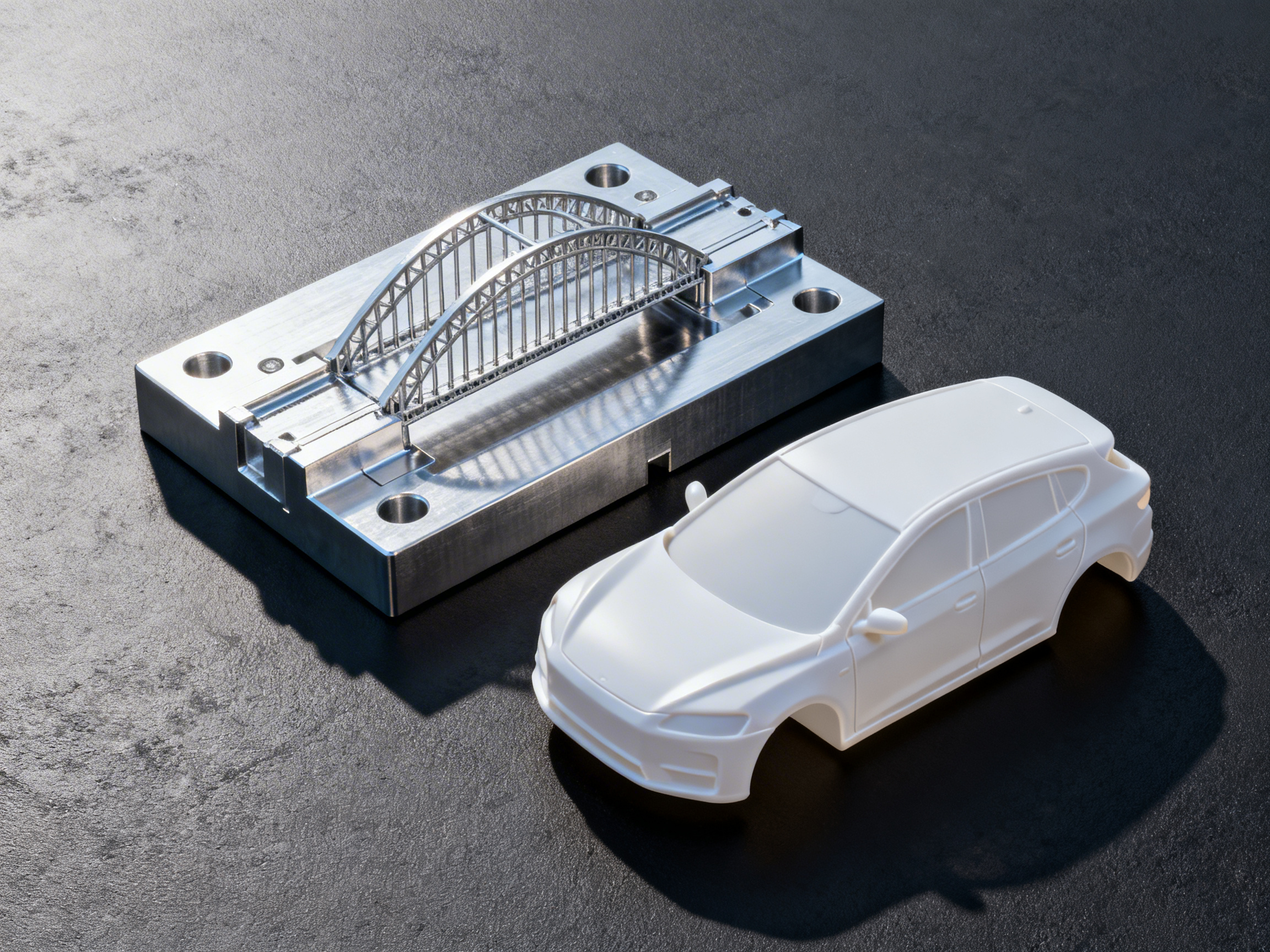
In the high-stakes environment of hardware development, the transition from prototype to mass production is often termed the “Valley of Death.” Bridge tooling serves as the critical engineering strategy to navigate this chasm safely. By leveraging on demand manufacturing workflows, engineers can bridge the gap between initial concept validation and capital-intensive steel tooling. This approach utilizes rapid aluminum molds to produce functional, production-grade parts without the excessive lead times or financial commitment of traditional P20 or H13 steel molds. It effectively de-risks the scaling process, ensuring design manufacturability while meeting aggressive time-to-market targets in sectors like medical devices and automotive engineering.
The Strategic Mechanics of Bridge Tooling Optimization
Bridge tooling is not merely a stopgap; it is a calculated phase in Product Lifecycle Management (PLM) that balances speed, cost, and risk. It allows engineering teams to validate injection molding processes and material properties before locking in expensive mass-production tools.
Overcoming Validation Limitations with Aluminum Alloys
While 3D printing serves well for form and fit, it often fails to replicate the isotropic mechanical properties required for functional testing. On-demand manufacturing examples frequently highlight how additive manufacturing struggles with surface finish consistency and material scalability beyond 50 units. In contrast, bridge molds machined from aviation-grade aluminum alloys, such as QC-10 or 7075, offer a superior alternative. QC-10 aluminum boasts high thermal conductivity, often reducing cycle times by 30% to 50% compared to standard tool steels. This thermal efficiency allows for rapid cooling, minimizing warpage in complex geometries and enabling the production of parts that closely mimic the physical characteristics of final mass-produced components. Engineers can thus validate tensile strength, chemical resistance, and snap-fit durability using the actual production resin, providing data that is impossible to obtain through stereolithography or sintering.
Enhancing Agility via Master Unit Die (MUD) Systems
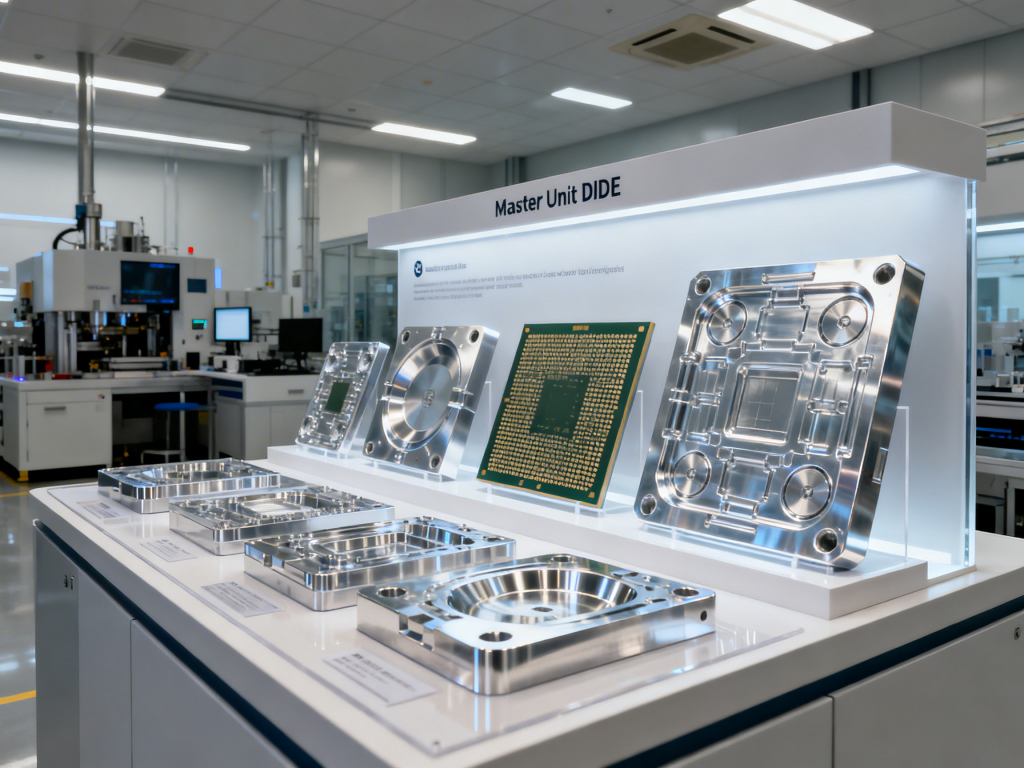
To further reduce costs and lead times, modern on demand manufacturing solutions integrate Master Unit Die (MUD) systems. This modular approach utilizes a standard mold base compatible with interchangeable aluminum inserts. By machining only the core and cavity inserts rather than an entire mold base, manufacturers can reduce tooling costs by approximately 40% and cut lead times to as little as two weeks. This agility allows for rapid design iterations (T-0 to T-1 trials) without the punitive financial penalties associated with modifying hardened steel tools. MUD systems facilitate a “trial run” philosophy, enabling R&D teams to refine gate locations, optimize ejection systems, and perfect Design for Manufacturability (DFM) parameters in a low-risk environment prior to committing to high-volume steel tooling.
Precision Rapid Tooling Capabilities at Livepoint Tooling
Livepoint Tooling specializes in delivering high-precision rapid tooling and injection molding services, supporting global clients from concept validation through to mass production with certified quality and speed.
Accelerating Market Entry with Certified Standards
Operating from a 6,800-square-meter facility with dual manufacturing bases, Livepoint Tooling bridges the gap between prototyping and production with remarkable efficiency. The company holds ISO 9001:2015 and IATF 16949:2016 certifications, ensuring that even bridge tooling projects meet rigorous automotive and industrial standards. Their capabilities allow for the delivery of T1 samples in as fast as two weeks, with no Minimum Order Quantity (MOQ) restrictions. This flexibility is supported by an extensive material library compatible with over 100 engineering-grade plastics and rubbers. By integrating in-house CNC machining with tolerance capabilities down to ±0.001 inches, Livepoint Tooling ensures that aluminum bridge tools maintain strict dimensional accuracy, effectively replicating the precision of production steel molds for critical validation phases.
Case Study: High-Precision Efficiency in Infrastructure
A testament to Livepoint Tooling’s engineering prowess is their collaboration on a high-precision pipe project for a major European distributor. The client required durable, leak-proof components for large-scale government water infrastructure, demanding tight adherence to specifications. Utilizing patented core-pulling and arc mold technologies, Livepoint Tooling achieved a dimensional tolerance of ±0.15 mm across a production run exceeding 300,000 units. The optimized mold design resulted in a 30% faster cycle time compared to conventional methods, significantly boosting throughput while maintaining zero defects. This case illustrates how advanced bridge tooling strategies can evolve into efficient low-to-mid-volume production solutions, providing robust validation while simultaneously meeting immediate market demand with reliable, high-performance components.
Engineers seeking to validate designs and accelerate production timelines are invited to upload CAD files to Livepoint Tooling for immediate DFM analysis and precision tooling quotations.
